
SANCTUARY
by James Keller
Directed by Spencer Butler
Cast:
Neville Bradbury, Glynn Caren, Alan Chisholm, Peter Field, Ned Gethings, Larry Irvin, Kay Scrivener, Phillip Sheahan, Geoff Webb, Andrew Wheaton, Norman Wilkinson
THE AUTHOR
James Keller was born in Australia and grew up in the Riverina district of New South Wales. After moving to Britain, he won a scholarship to a London drama school and began writing plays while still a student. An earlier play, Relics, was performed at the LAMDA Theatre in October 1975. Sanctuary, produced at The Questors the following March, appears to have been his first full-length play to receive a major public production.
THE PLAY
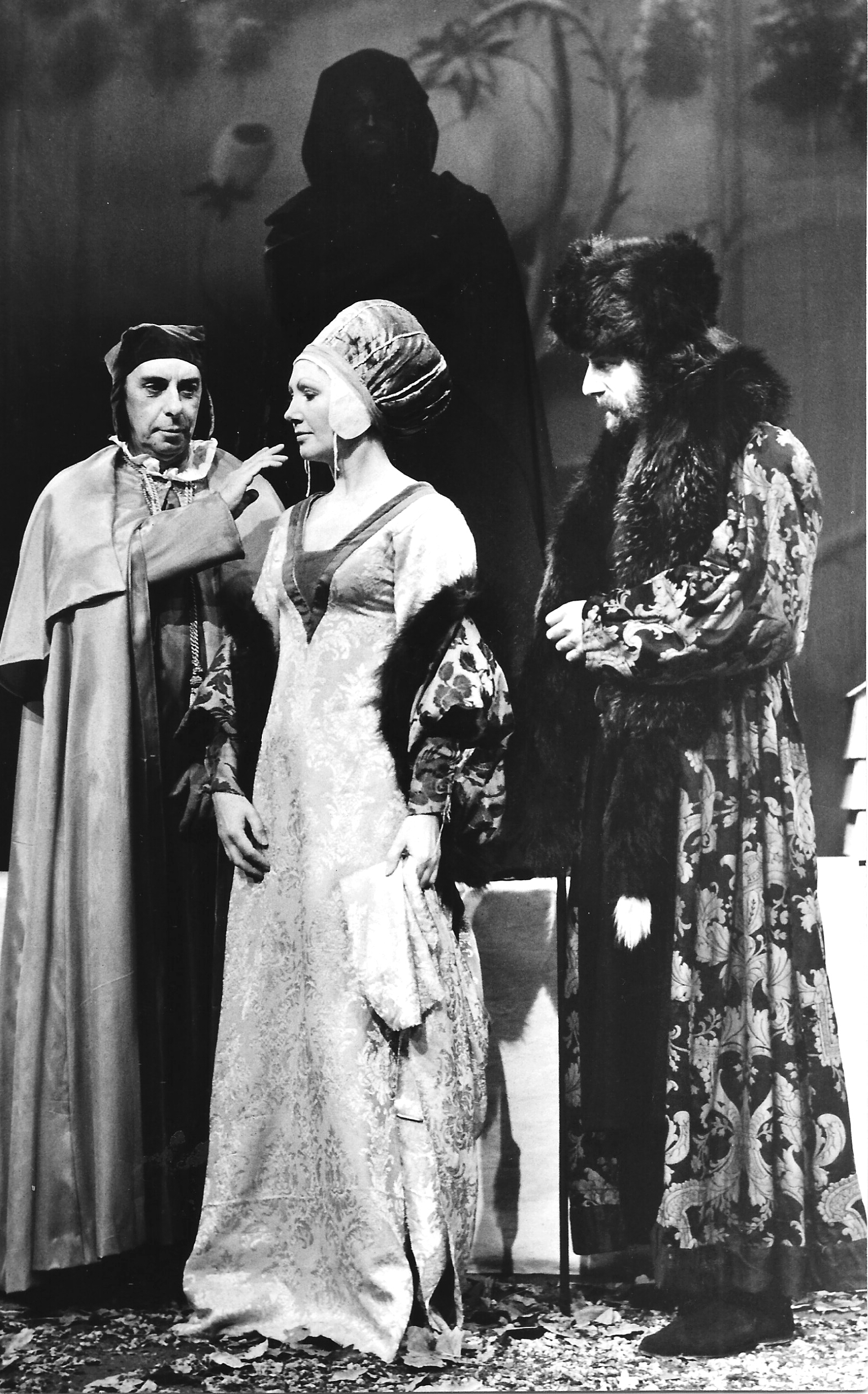 Set in a Burgundian town on All Fools’ Night in the mid-sixteenth century, Sanctuary brings together a cardinal-bishop planning a cathedral, an ambitious brotherhood of merchants, a mysterious stranger known as the Raven, and a travelling company of players. Their competing designs centre upon Valentina, the solitary “Lady in the Garden”.
As the players stage their entertainment, reality dissolves into fantasy, masque and morality play, with the Seven Deadly Sins joining the action. Keller uses this elaborate theatrical framework to explore the uneasy relationship between religion, commerce, political power and personal desire.
PHOTOS
PRESS RESPONSE
The Middlesex Chronicle
The Shepherds Bush Gazette
Amateur Stage
TOAD (Dehn)
QUESTORS ARCHIVES
SANCTUARY