|
|||
|
|||
Cast: Production Team: |
|||
|
|||
|
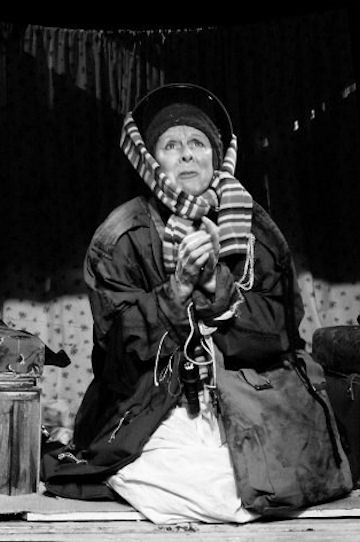
Alan Bennett at The Questors DIRECTORS' NOTES Two women: Two Vehicles Here, unfolding before you, is that tale from start to finish, plainly told as befits the writer. From the glint in the eye of the Lady as she measures up his garden, to the departure of the van courtesy of the council many years later, there is plenty of drama to keep us in the thrall of the Lady's spell. There are the neighbours, embryonic 'Islington media types', anxious about a possible fall in the value of their property; there’s the panoply of health professionals for whom the ‘client’ is supreme and the unwillingly designated 'carer’ a bit of a nuisance; the seedy old acquaintance who can turn any opportunity into a buck. There’s Bennett’s timid mother, going downhill in parallel to the noisy Miss Shepherd. There are louts for whom the yellow peril and its occupant are a magnet. Most prominently, there’s a second Alan Bennett to give us the alternative view of the situations, his innermost thoughts and wishful-thinking reactions. Does it work, theatrically, to eliminate the sub-text and spell it all out? You have to decide that for yourself. I think it was a genius of an idea which gives the plot a whole new dynamic rarely explored on stage. We are all glitter-balls, with a multi-faceted surface angled differently to each person we encounter. Miss Shepherd, with all her shortcomings, provided Bennett with another facet of human experience. Despite his grand literary life, he’s always acutely aware of his humble roots, and she brought another element into his life, a frisson of Bloomsbury woman falling off the cliff of sanity. At the end of this bizarre tale, Alan Bennett comments to the effect that we are not to assume that his life during these twenty years was consumed by, lived for and revolved around the batty woman; that no, honestly, he really did ‘have a life’, totally independent of this uninvited, ‘temporary’ lodger. Of course that is true. Despite running the gamut of demands, lectures and rudeness as he attempted to journey to his own front door, his working life, as northern England’s dour but chirpy playwright and wit, blossomed during this period. Whilst Miss Shepherd and his mother were both suffering failing health and ‘delusions’, he was writing plays and TV dramas fast and furious, amongst them; A Woman of No Importance in 1982; A Private Function in 1984; A Visit from Miss Prothero in 1987. Also in 1987 he perfected the art of the single actress show in his collection Talking Heads: A Chip in the Sugar, Bed Among the Lentils, A Lady of Letters, Her Big Chance, Soldering On and A Cream Cracker Under the Settee. Here are English ladies at their odd, weird and eccentric best, with gentle shades of Mam and Miss Shepherd shining through. However reticent Bennett is to accept saintly status, to be lauded as caring or kind, he can’t actually deny that he performed a great charitable act in having a bag lady in his garden, which neither you nor I would even contemplate. "We might," says the character of Pauline, the neighbour, but we know she’s saying it to get Brownie points. Let’s take a leaf from Alan 2’s book and be honest. She and her husband wouldn't and didn’t, and neither would we. Bennett will go down in history as a brilliant and wonderful man. He earned that tag previously, prior to this strange episode in his life, through this story it is accentuated. Early on in the play, The Lady mistakes him for St John. I think St Alan of Camden has a nice ring to it. Oh, by the way: Alan Bennett wishes us luck with the show. No! Not one of our characters and not one (or both) of our actors. The real Alan Bennett. Honestly! Jo Matthews |