
QUESTORIES
Harold Pinter, The Birthday Party and A Dead Parrot
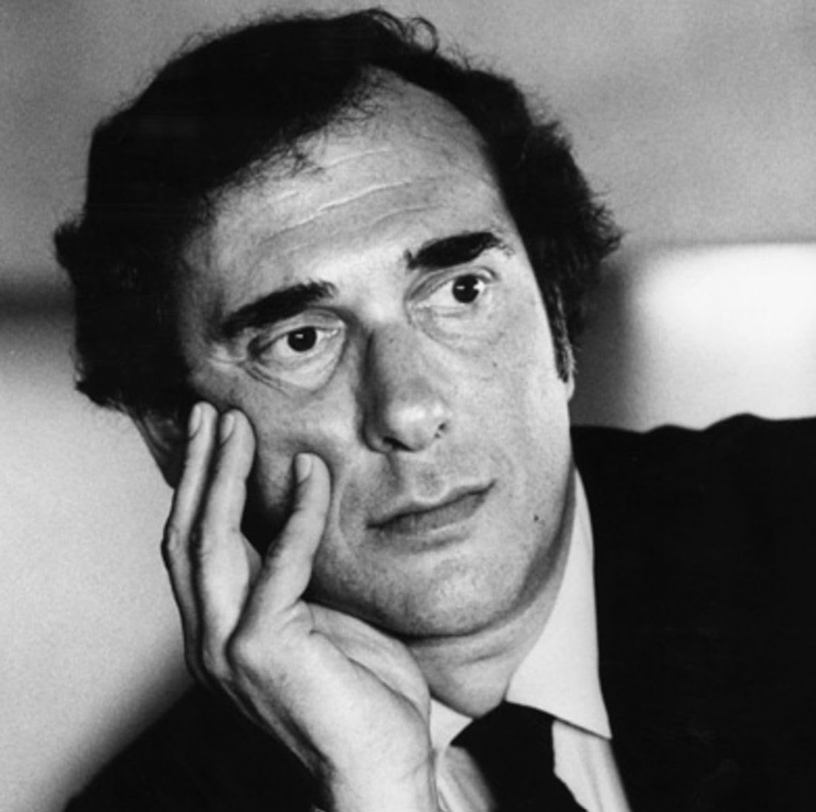
It was Saturday 5 December 1959 at The Questors Theatre in Mattock Lane and Harold Pinter was apparently in the bar shouting his head off. It was the first night of The Birthday Party and he wasn't happy.
Jo Irvin, who played Meg, remembered many years later that Pinter had been warned about director Michael Almaz's unusual visual concept for the play. As the action progressed, the setting was gradually stripped away, becoming "less and less". Ffrangcon Whelan, whose husband Peter played Stanley, remembered one particularly bizarre detail: a stuffed parrot which progressively lost its feathers until, by the final act, only its skeleton remained.
Pinter made his feelings vehemently clear afterwards. The critics, however, were markedly impressed with the production.
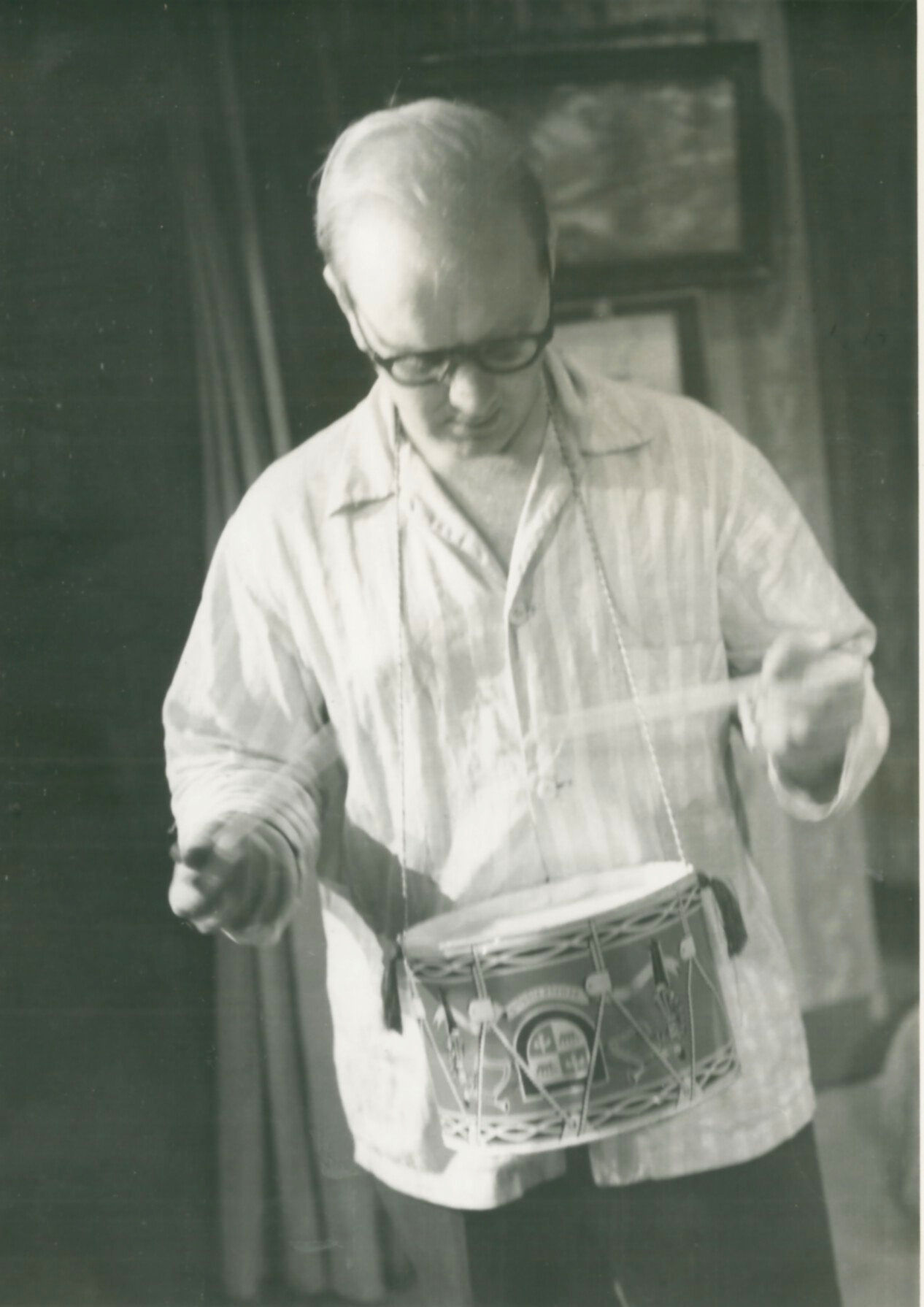
Douglas McVay (Middlesex County Times) declared: "The impossible has been done. The amateurs have beaten the professionals at their own game." Michael Almaz's production, he wrote, was at least as good as Peter Wood's original London staging and perhaps "a shade better". It could, he believed, have transferred directly to the West End.
Meanwhile, in the New Statesman, the distinguished critic A. Alvarez found it powerful, frightening and extremely funny, and concluded simply: "It should be seen," recommending The Questors as "probably the most ambitious amateur company in the country".
So, eighteen months after professional critics had helped to kill The Birthday Party after barely a week in London, an amateur theatre in a corrugated tin hut in Ealing was being praised in the national press for demonstrating the true significance of the play—upsetting the playwright in the process.
A suitably Pinteresque beginning to the story.
A Famous Failure
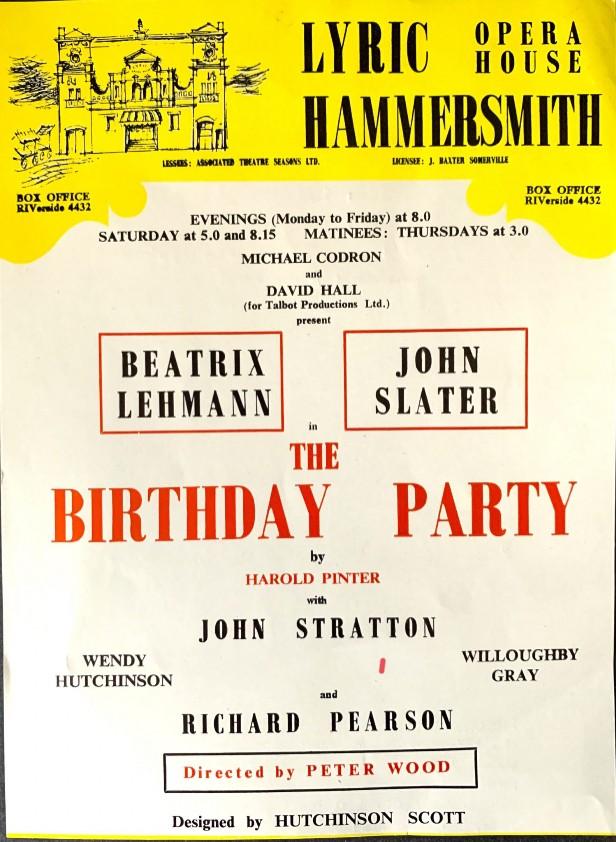
Pinter's first full-length play opened at the Arts Theatre, Cambridge, on 28 April 1958, directed by Peter Wood. When it transferred to the Lyric Theatre, Hammersmith, the notices were overwhelmingly bad and the play closed after eight performances. Many critics seemed genuinely baffled by what Pinter was attempting—it wasn't funny enough, it was half-gibberish, full of non-sequiturs and lunatic ravings. Even Kenneth Tynan, subsequently one of the champions of the new theatre, failed to recognise what was happening.
There was one famous dissenting voice. Harold Hobson of the Sunday Times recognised in Pinter "the most original, disturbing and arresting talent in theatrical London". Unfortunately, Hobson's review appeared too late. By then The Birthday Party had already closed.
But it stubbornly refused to die.
Keeping The Party Going
One of the people who had faith in Pinter was the pioneering theatre director Stephen Joseph, very much a friend of The Questors. Late in 1958 he offered Pinter the opportunity to direct The Birthday Party himself for his Studio Theatre company. That production toured with a young Alan Ayckbourn playing Stanley. It was Pinter's professional directing debut and gave him the opportunity to establish for himself the precise rhythms, pauses and silences which were to become so important to the performance of his work. Then the amateur theatre began to take an interest.
The Tower Theatre seems to have been the first in May 1959. Pinter, who lived locally, saw the production and attended some rehearsals.
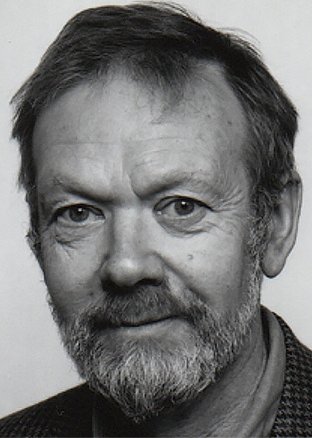
By the autumn the play was beginning to ripple through some of the more adventurous non-professional theatres. Newcastle People's Theatre presented it on 14 November. Two days later, on 16 November, The Birthday Party opened at Bolton Little Theatre after Irving Wardle, a young journalist who was to become one of the most important theatre critics of his generation, had championed the play in the Bolton Evening News. Pinter spent several days working with the company during the final rehearsals which gave the production considerable impetus, although the Bolton audiences were by no means universally converted: many found the play as bewildering as the London critics had done.
Pinter Comes To Ealing
The Questors production opened in the old "Tin Hut" on 5 December 1959 and ran until 16 December. Michael Almaz directed. Jo Arundel (later Jo Irvin) played Meg; Ned Gethings was Petey; Peter Whelan played Stanley; Ann Symons was Lulu; Cyril Spencer played Goldberg and Bernard McLaughlin was McCann. George Benn designed the setting.
Even the casting had a touch of accident about it.
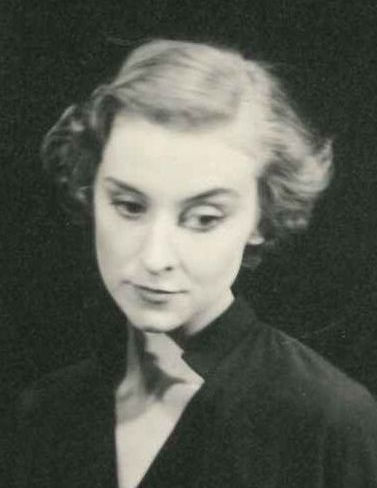
Jo Irvin remembered arriving at The Questors one Sunday afternoon with her new baby, intending simply to show the baby to friends. She discovered that a reading and casting session for The Birthday Party was taking place. Pinter himself was there, looking, as she recalled, "a bit gruff".
Jo had no intention of auditioning, but Alfred Emmet persuaded her to join the reading because there were not enough people present. She was initially asked to read Lulu. Fascinated by the play, she asked if she might try Meg instead—and got the part.
As Jo later remembered it, Pinter sat quietly through the audition and through Michael Almaz's explanation of what he intended to do with the play. When prompted to say what the play meant, Pinter offered no interpretation. In true Pinter fashion he was fiercely concerned with what was actually written, but resistant to supplying psychological explanations or an author's key with which to unlock it.
And Michael Almaz was certainly not going to give him a conventional production.
Who Was Michael Almaz?
The Birthday Party was Michael Almaz's first production for Questors but he was no stranger to the interpretation of modern drama.
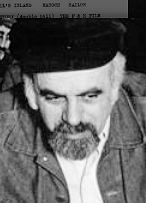
Born in Tel Aviv, Almaz had volunteered for the British Army in 1942. After the war he wrote radio plays for the Voice of Israel and travelled to the United States intending to study theatre directing. Much of his real theatrical education, he later said, came from seeing the great New York productions and performers of the period.
Back in Israel he became deeply involved in experimental theatre. He translated and produced Beckett's Waiting for Godot in Hebrew; formed his own company, Zeera; staged The Playboy of the Western World; and produced an Ionesco double bill of The Bald Prima Donna and The Lesson.
Around 1958 he came to London to work for the BBC's overseas broadcasting service to Israel. He became associated with the Artaud Company and subsequently Café Theatre, writing, adapting and directing a remarkable range of small-scale works.
Immersed as he was in these radical works it is hardly surprising that Almaz was attracted to a new play with a mixture of banal conversation, comedy, menace and unexplained violence which had defeated much of the established London critical establishment.
Almaz evidently decided to heighten rather than play down its strangeness. Hence the disappearing room and the increasingly skeletal parrot.
There can be little doubt that theatrically the production worked, but from Pinter's point of view it may have imposed too much interpretation on something he preferred to remain unexplained. As Alvarez suggested in the New Statesman, Almaz seemed determined to turn Goldberg and McCann explicitly into "agents of death", whereas the play was richer and less easily defined than that.
Enterprise and Ambition
Douglas McVay's review in the Middlesex County Times could scarcely have been more enthusiastic. He praised Peter Whelan's Stanley in particular and thought the interrogation and birthday party sequences displayed extraordinary fluency, pace and precision. Even the setting, which apparently enraged Pinter, struck McVay as an improvement on the professional production because of its symbolic shabbiness.
Alvarez's New Statesman review was equally important because it placed the production within a wider reassessment both of Pinter and of The Questors itself. He praised Jo Arundel's Meg and Ann Symons's Lulu and, despite reservations about the production's occasional slowness and Almaz's interpretation, regarded the journey to Ealing as well worthwhile.
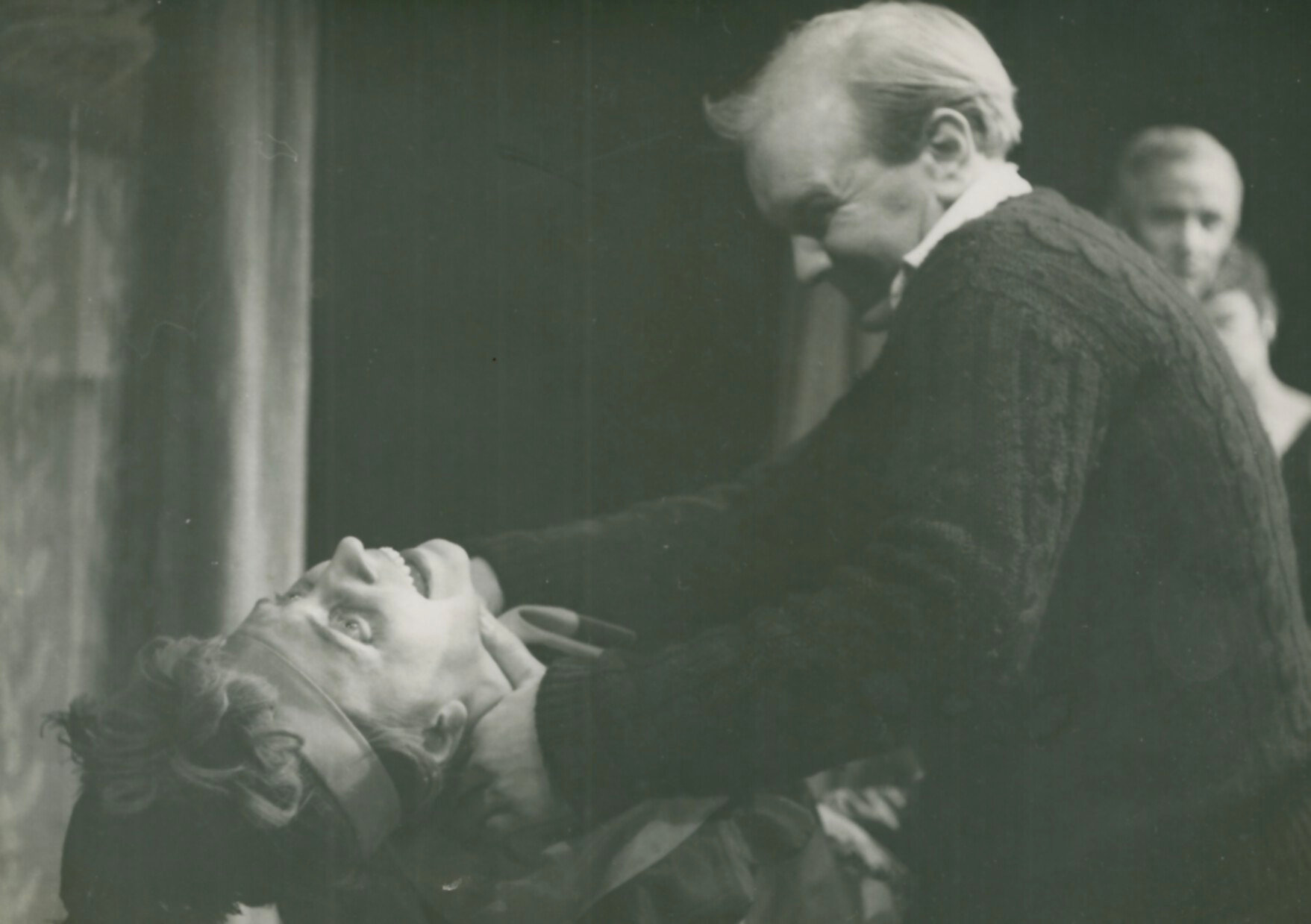 The Birthday Party, The Questors 1959
There was an institutional significance here too. Alvarez noted that this unusually ambitious amateur company was prepared to stage plays which had scarcely been given a chance in the West End, while at the same time raising the money to build its own state-of-the-art playhouse.
For the thirteen-year-old Michael Rosen, sitting somewhere in the audience, questions about symbolism or Pinter's intentions mattered rather less. Looking back nearly half a century later, Rosen remembered the production as "terrific, baffling, scary and unnerving". It became one of his formative theatrical experiences and part of what The Questors taught him about performance, dramatic space and what theatre could do.
Perhaps that is as significant a testimony as any review.
A Joint Rescue
The Birthday Party survived because a surprising number of people refused to accept the verdict delivered by the London critics in May 1958. Harold Hobson publicly challenged it. Stephen Joseph gave Pinter the opportunity to direct the play himself. The Tower Theatre took it up. Irving Wardle championed it and Bolton Little Theatre brought Pinter into its rehearsal room. Newcastle People's Theatre staged it. Then The Questors presented a bold, controversial production which attracted serious critical attention and demonstrated once again that there was much more to the play than its first reception had suggested.
The process continued. On 22 March 1960 an Associated-Rediffusion television production of The Birthday Party was transmitted to an audience of millions. A few weeks later The Caretaker opened and Pinter's position in the British theatre changed decisively.
So The Questors did not single-handedly rescue Harold Pinter from oblivion. What it did was perhaps more characteristic, and more important. At a point when Pinter was still an uncertain proposition, the theatre took his work seriously. It put one of its strongest directors and casts behind a play the West End had rejected. It allowed that director to take risks with it. It brought the author into contact with the company. And it gave audiences the chance to make up their own minds.
As The Questors begins another season with Harold Pinter, it is worth remembering that our association with him began when performing a Pinter play was not yet an act of homage to an established modern classic—it was a risk.
John Dobson
September 2026
THE BIRTHDAY PARTY 1959