
IT WAS NEVER SO MERRY, MY LORD
by David Shellan
Directed by David Gower
Cast:
Anthony Barber, Francis Fallon, Barbara Hutchins, Mary Phillips, Colin Pronger, Kenneth Ratcliffe, Tony Worth
THE AUTHOR
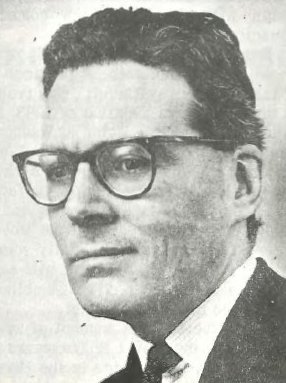 David Shellan was a British journalist and playwright whose career was devoted principally to writing. By 1971 he had completed some thirty plays, many of them one-act works, several of which had won prizes at amateur drama festivals; three had also been published. His first professionally produced full-length play, The Immutability of Lewis Brown, was presented by the Repertory Players at London’s Comedy Theatre in 1965.
The Questors premiered It Was Never So Merry, My Lord in the 1967 New Plays Festival; a revised version, retitled I’m King of the Castle, was subsequently staged at Richmond Theatre.
Shellan returned to the Festival in 1971 with the large-scale historical drama The Last Emperors.
THE PLAY
 QUESTOPICS, June 1967
"It's positively Chekovian, it has a beginning, a middle and an end" David Gower was heard to say in the Grapevine. an intriguing thought and clearly his views on his coming production of IT WAS NEVER SO MERRY, MY LORD, by David Shellan which opens The Festival on 17th June. "It's true", he confirmed later "we are so used to way out productions in the New Plays Festivals, something of this nature is exciting and exhilarating. It's a positive relief to be asked to produce what I consider to be the best constructed play that has come my way in three years as a reader for the Questors Theatre".
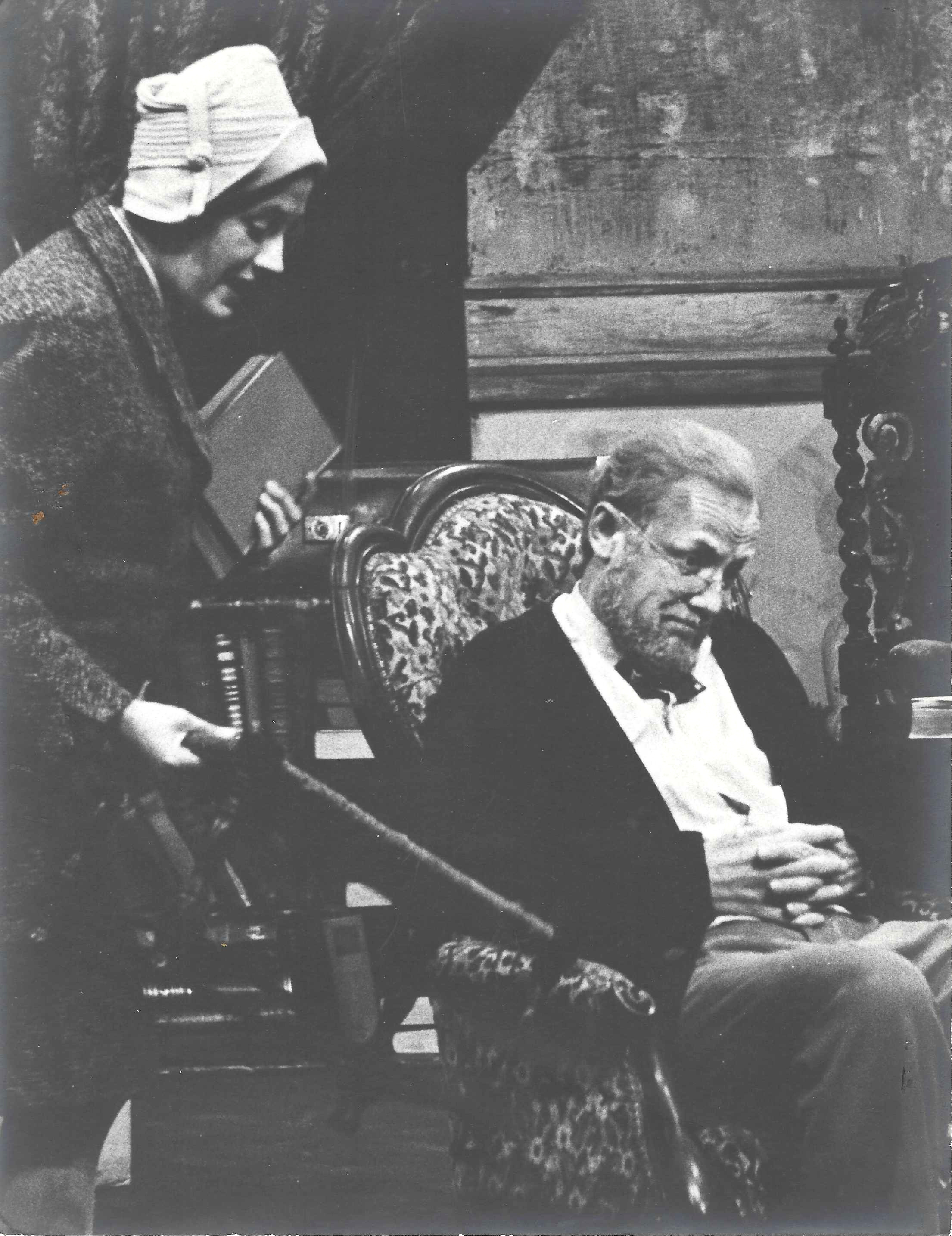
"It is the story of a recluse, a rejected history teacher—rejected because of his ideas on teaching, and the play deals with his involvement with three of his past and present students."
PRODUCTION PHOTOS
The following year IT WAS NEVER SO MERRY, MY LORD was restaged at The Richmond Theatre under the title I'M KING OF THE CASTLE, directed by John Gordon Ash and with Frederick Farley in the part of the professor.
PRESS RESPONSE
David Shellan's study of an eccentric historian and his circle of dependants received mixed but generally appreciative reviews. Critics admired the originality of its central idea, its sympathetic portrayal of lonely misfits and much of its witty dialogue. However, all three reviewers felt the play lost coherence in its final stages. While Douglas McVay considered it an audience success with an outstanding central performance by Colin Pronger, Amateur Stage thought the concluding play-within-a-play was artificially imposed, and The Stage criticised the final act as dramatically unsatisfactory. The consensus was that an imaginative and often engaging play ultimately failed to achieve complete dramatic unity.
Amateur Stage
The Middlesex County Times
The Stage and Television Today
QUESTORS ARCHIVES
IT WAS NEVER SO MERRY, MY LORD