
THE LAST EMPERORS
by David Shelland
Directed by Peter Anderson
Cast:
Derek Chandler, Tom Ellison, Kevin Fells, Richard Halberstadt, Harry Ives, Tanya Kidby, Richard Lewis, Frances Martin, Philip Mountford, Nigel Pierce, Margaret Pollock, Tom Ponsonby, Tony Puleston, Tim Richards, Dick Roberts, John Smith, Michael Smith, Rita Soley, Caroline Taylor, Roger De Toney, Geoffrey Webb, Beverley Yates
THE AUTHOR
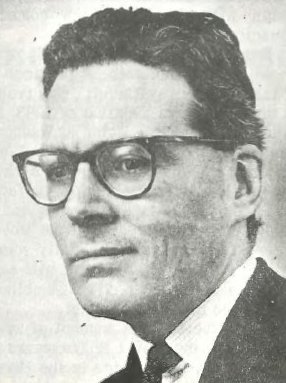 David Shellan was a British journalist and playwright whose career was devoted principally to writing. By 1971 he had completed some thirty plays, many of them one-act works, several of which had won prizes at amateur drama festivals; three had also been published. His first professionally produced full-length play, The Immutability of Lewis Brown, was presented by the Repertory Players at London’s Comedy Theatre in 1965.
The Questors premiered It Was Never So Merry, My Lord in the 1967 New Plays Festival; a revised version, retitled I’m King of the Castle, was subsequently staged at Richmond Theatre.
Shellan returned to the Festival in 1971 with the large-scale historical drama The Last Emperors.
THE PLAY
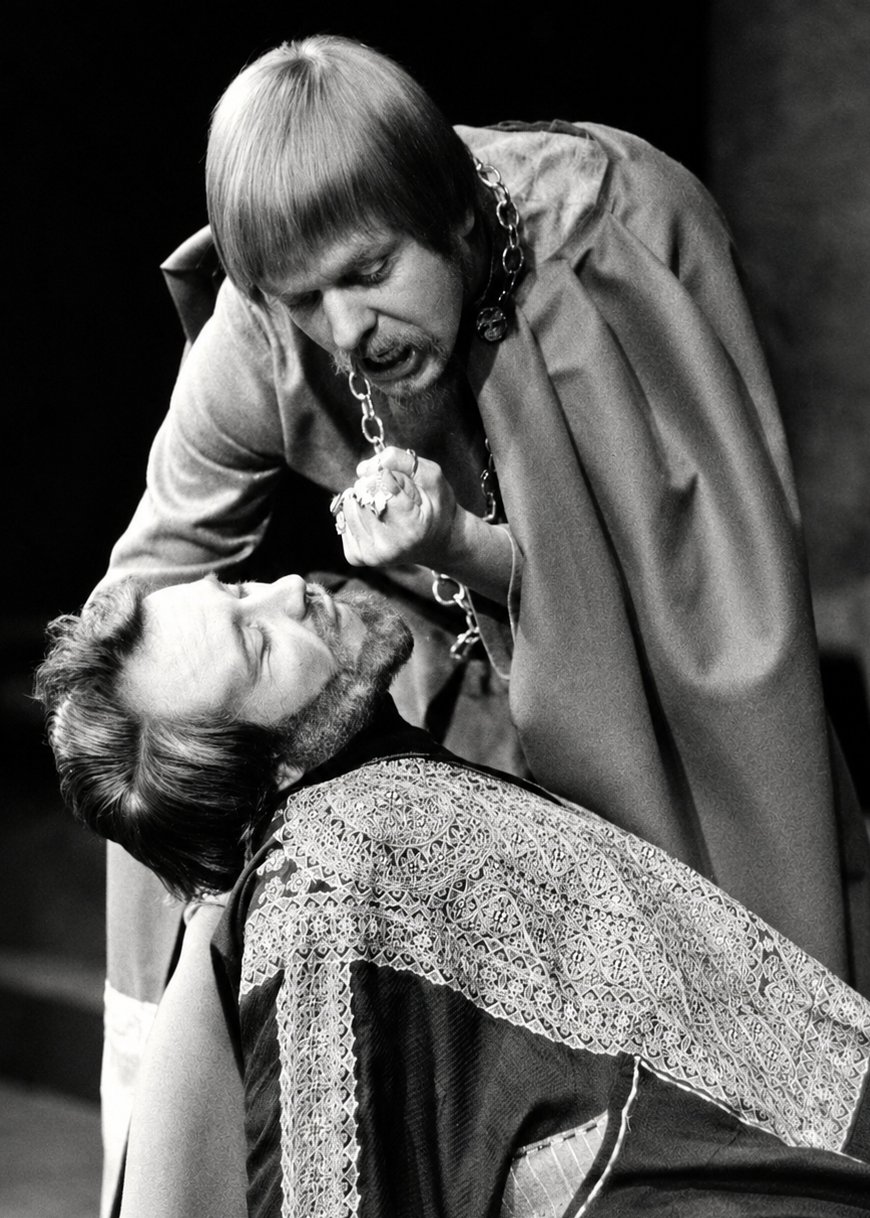 Set between 1430 and the fall of Constantinople in 1453, The Last Emperors follows the final decades of the Byzantine Empire through John VIII and Constantine XI Palaeologus, their family, ministers, soldiers and religious advisers. Against the gathering Ottoman threat, the play examines the conflict between political survival and religious principle—particularly the attempt to reunite the Eastern and Western Churches in return for military support.
James Saunders described it as an entertaining historical drama with taut, idiomatic dialogue, seeing in its treatment of Christianity a wider study of how revolutionary beliefs can undermine established temporal power from within.
PHOTOS
PRESS RESPONSE
Press opinion on David Shellan’s historical drama was sharply divided, though most reviewers admired the ambition of its subject and agreed that Dick Roberts’s performance as Emperor John VIII was the production’s chief strength. Clifford R. Sewell in the Eltham Times found it an intelligent and well-documented account of the fall of Constantinople, enlivened by modern parallels, while the Feltham Chronicle called it “absorbingly interesting” and praised Peter Anderson’s direction, the acting and the impressive technical presentation. The Brentford & Chiswick Times likewise recognised Shellan’s considerable feat of compression and described Roberts’s sympathetic portrayal as memorable.
Other critics felt that the scholarship had not been successfully transformed into theatre. L.G.S. in The Stage considered the succession of short conversations better suited to television and judged the play something “to be admired rather than enjoyed”; Garry O’Connor in The Financial Times found it sprawling, dramatically unsatisfactory and lacking any gathering sense of catastrophe. N.H. in Amateur Stage believed that a stronger play lay within the script but called for extensive cutting and rewriting, while Walter Lucas in Drama Quarterly thought its promising early characterisation and humour deteriorated badly in the second half.
Even the less favourable notices, however, generally praised Roberts, and several also commended John Rolfe’s ambitious designs and the Questors’ handling of the play’s formidable scenic demands.
Amateur Stage
The Stage and Television Today
The Financial Times
The Feltham Chronicle
The Middlesex County Times
The Eltham Times
The Brentford and Chiswick Times
QUESTORS ARCHIVES
THE LAST EMPERORS