Directed by Robin Duval Cast: Jo Arundel, Tony Barber, Helen Blatch, David Gower, Meg Leng, Caroline O'Reilly, Sheila Tiffany
THE AUTHOR
James Saunders (1925–2004) was one of the most distinctive British dramatists to emerge in the late 1950s and became particularly closely associated with The Questors. His early work combined theatrical experiment, philosophical enquiry and an acute ear for the ambiguities of language, leading to his recognition as a British exponent of the Theatre of the Absurd.
Some time after a worldwide holocaust, five women inhabit an apparently idyllic semi-tropical island. Men are believed to be extinct, women have become capable of reproducing without them, and even nature has lost its destructive impulses: bees no longer sting, the sea does not erode the beach and fruit regenerates as soon as it is picked. Into this harmonious but uneventful society come two surviving men. Their arrival reawakens heterosexual desire and introduces jealousy, rivalry and intrigue.
Described by Saunders as a “male chauvinist comedy”, The Island uses its futuristic premise primarily as the basis for an entertaining comedy about the disruptive power of sexual attraction.
PRESS RESPONSE
The Island was easily the Festival’s greatest critical success. Michael Billington in The Guardian called it a “sexy, skittish and beguiling comedy” and Saunders’s most potent play since Hans Kohlhaas, admiring the way its Shavian argument about sexual stereotypes was rooted in broad, Laurel-and-Hardy comedy. The Stage similarly found it an excellent “audience show”: familiar in places, but buoyed by funny lines and provocative ideas. Amateur Stage praised Saunders’s witty treatment of wider questions about sexual identity and social conditioning, while Nick Smurthwaite in the Thames Valley Times enjoyed the broad comedy of the two singularly unimpressive male survivors.
Some critics nevertheless found the play intellectually slight. Garry O’Connor in the Financial Times admired its intelligence and wit but thought the central situation insufficiently developed, allowing the comedy to dwindle into inconsequence. Alan Chambers in Questopics also felt that Saunders’s fable challenged masculine complacency without ever delivering a knockout blow and acknowledged that its abrupt ending left something unresolved. Even so, he found it a thoroughly satisfying evening, and the production itself—directed by Robin Duval—was consistently praised for its spirited acting, imaginative design and dreamlike atmosphere.

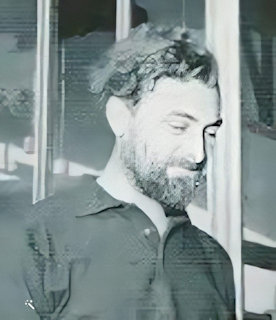 James Saunders (1925–2004) was one of the most distinctive British dramatists to emerge in the late 1950s and became particularly closely associated with The Questors. His early work combined theatrical experiment, philosophical enquiry and an acute ear for the ambiguities of language, leading to his recognition as a British exponent of the Theatre of the Absurd.
 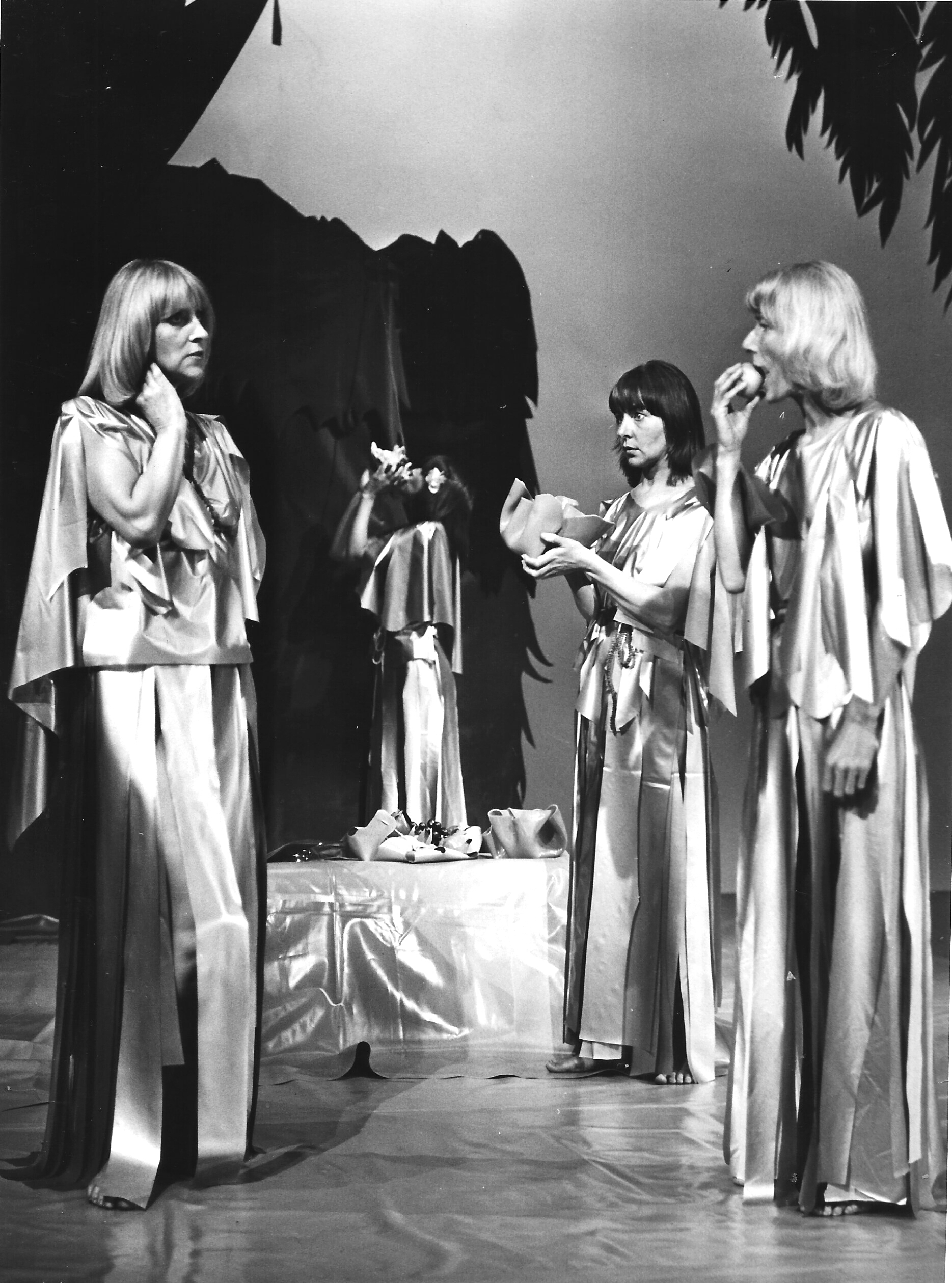 Some time after a worldwide holocaust, five women inhabit an apparently idyllic semi-tropical island. Men are believed to be extinct, women have become capable of reproducing without them, and even nature has lost its destructive impulses: bees no longer sting, the sea does not erode the beach and fruit regenerates as soon as it is picked. Into this harmonious but uneventful society come two surviving men. Their arrival reawakens heterosexual desire and introduces jealousy, rivalry and intrigue.