
FUNLAND
by Dannie Abse
Directed by John Turner
Cast:
Timothy Dehn, Paul Ekins, Cathie Fraser, Robin Ingram, Rosemary Parry Jones, Richard Lewis, Peter Macnamara, Michelle Mikardo, Tom Pritchard, Phillip Sheahan, Susan Solomon, John Wilbourn, Norman Wilkinson
THE AUTHOR
 Dannie Abse (1923–2014) was a Welsh poet, novelist, playwright and physician. Born into a Jewish family in Cardiff, he practised medicine for more than thirty years while establishing himself as one of Britain’s most admired contemporary poets.
Abse was a regular contributor to the New Plays Festival and a close friend of The Questors, which presented The House of Cowards (1960), Gone and The Joker (1962), Is the House Shut? (1964), The Dogs of Pavlov (1969) and Funland (1975).
The House of Cowards won the Charles Henry Foyle Award, while the publication of Three Questors Plays in 1967 reflected Abse’s particularly close association with the theatre.
The Questors later revived Gone in 1983 and presented Three Masks of “O” in 1997.
Alfred Emmet's Foreword to three of Dannie Abse's plays published in 1967
Dannie Abse on Wiklipedia
Dannie Abse Obituary (The Guardian)
THE PLAY
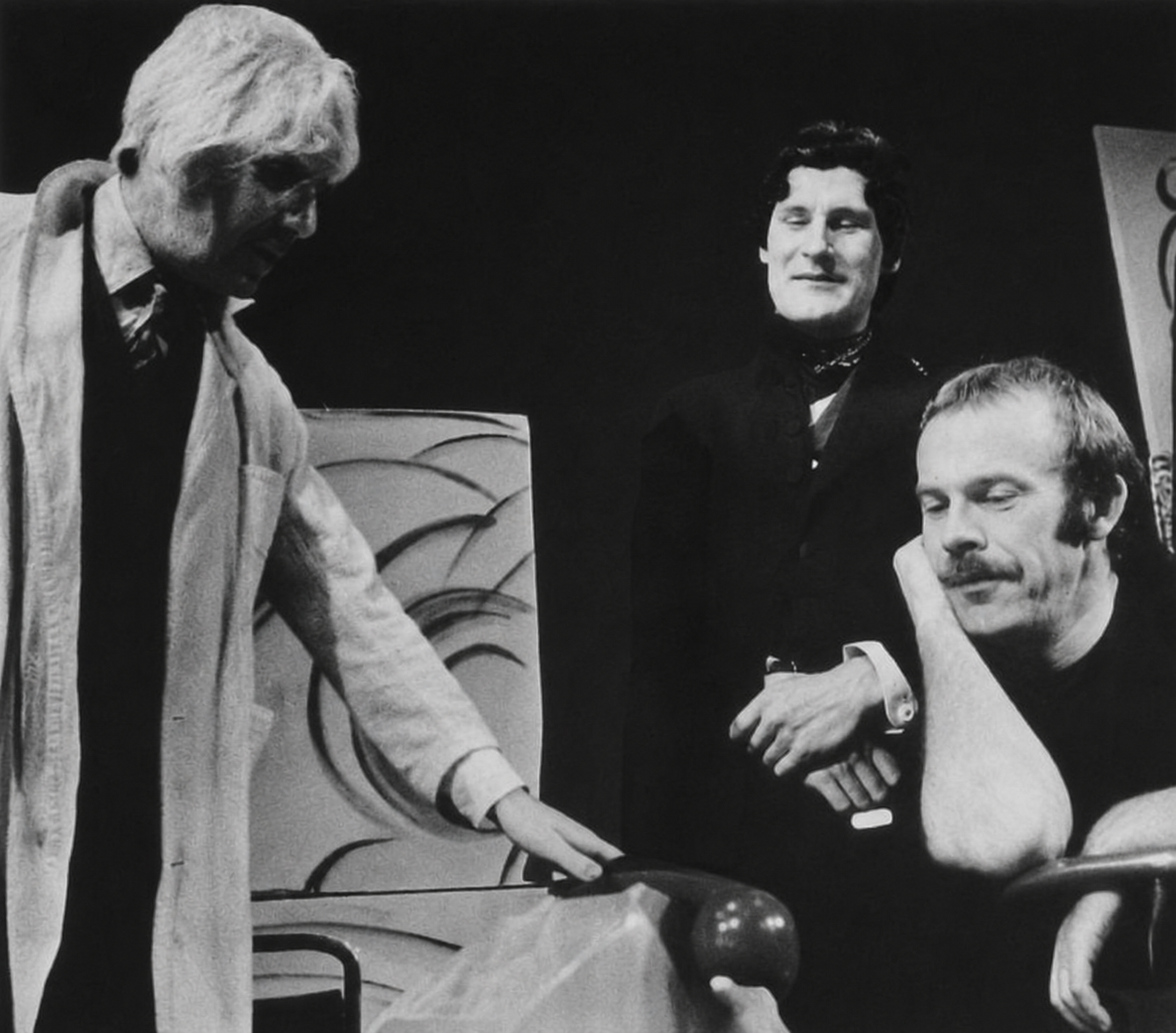 takes place in a mental hospital as its patients prepare for one of their occasional concerts. Among them are a man who believes himself dead, a former stage magician and a poet; their proposed entertainment embraces songs, poetry and magic. As the preparations develop, the play moves through different levels of reality, repeatedly unsettling the distinction between sanity and madness and implicating the audience in what it sees.
Abse brings together comedy and pathos with the poetry and theatrical illusion characteristic of his writing. Although the subject is potentially disturbing, Funland was conceived above all as an imaginative and humane comedy—a piece of poetic theatre intended to amuse, involve and move its audience.
PHOTOS
PRESS RESPONSE
Funland sharply divided the critics. Anthony McCall in The Stage considered it the best play of the Festival, praising the clarity and economy with which Abse examined the uncertain boundary between sanity and madness, and believing that its freshness and poetic quality deserved a professional production. Garry O’Connor in the Financial Times also recognised an ambitious and essentially poetic structure, but felt that potentially fruitful theatrical ideas were left undeveloped and that the play lacked a sufficiently strong central character. Amateur Stage thought Abse’s attempt to build a drama around a poem interesting, but found the episodic construction—particularly the music-hall sequence—too disjointed to form a coherent whole.
Other reviewers were considerably more hostile. Nick Smurthwaite in the Thames Valley Times found its central argument familiar and indistinctly expressed; Tribune complained of heavy-handed symbolism, caricature and an uncertain tone; and The Gazette dismissed the play as excessively demanding, sometimes boring and ultimately a failure.
Alan Chambers in Questopics was more sympathetic to the text, believing that the hospital scenes might have proved truthful and funny if played with sufficient attack. He concluded that the production had failed to match Abse’s intentions, although he singled out Norman Wilkinson’s delivery of the climactic poem for particular praise.
The Middlesex Chronicle
The Tribune
The Stage and Television Today
Amateur Stage
Thames Valley Times
Financial Times
The Gazette
Questopics
QUESTORS ARCHIVES
FUNLAND