
THE LAST ANALYSIS
by Roland Bowden
Directed by David Gower
Cast:
Susan Brooks, Alan Chisholm, Elizabeth Chisholm, Alan Chisholm, Kevin Fells, Andy Harvey, John Holloway, Peter Holmes, Richard Lewis, John Macpherson, Susan Solomon, Margaret Turner, John Wilbourn, John Wilson
THE AUTHOR
THE PLAY
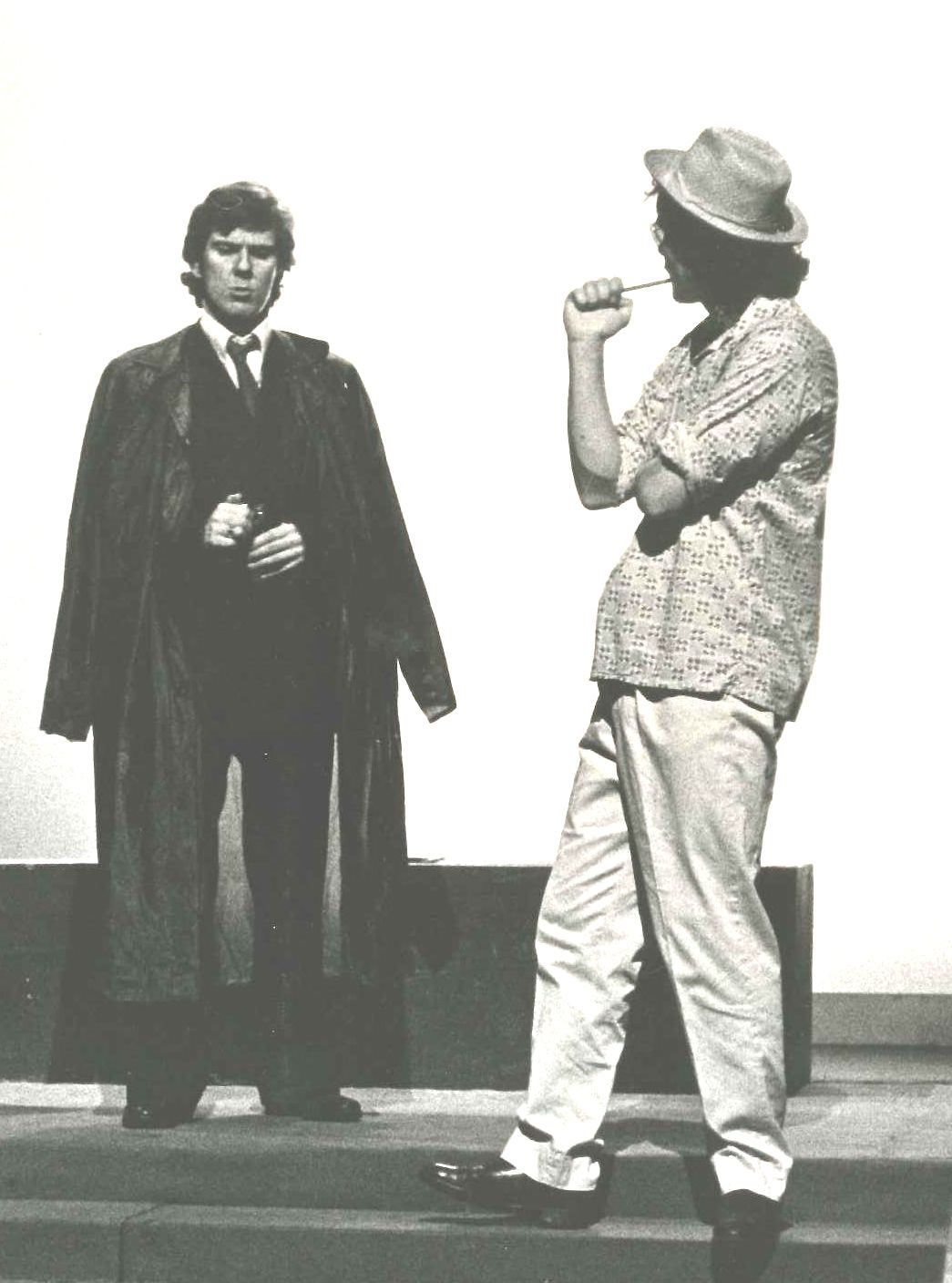 The Last Analysis is a biographical drama about the controversial Austrian psychoanalyst Wilhelm Reich, an early advocate of sexual liberation who developed the theory of “Orgone” energy. The play is framed by psychiatric sessions during Reich's imprisonment at Lewisburg Penitentiary in 1957, with two actors portraying him at different ages as episodes from his past are relived. These encompass his marriages, his associations and disputes with Freud and Einstein, his political involvement in Europe and his continuing attempts to gain acceptance for his theories.
Rather than simply examining Reich's ideas, the play sets out to explore the man himself and the process by which an eccentric first tolerated by society may eventually find himself rejected and destroyed by it.
PHOTOS
PRESS RESPONSE
Although critics recognised both the fascination of Wilhelm Reich as a subject and the extent of Roland Bowden's research, The Last Analysis received the Festival's most consistently adverse notices. Michael Billington in The Guardian thought the play far too “cool, chaste, and academic” for a man who preached sexual liberation, describing the result as an oddly antiseptic and cerebral portrait lacking either passion or eroticism. R.S. in Amateur Stage similarly felt that Bowden's diligent research had produced a clinical documentary rather than a drama, while Drama Quarterly judged it wordy and over-researched, needing more imagination and less factual material. Maurice Reeve in the Middlesex Chronicle found it “hard going”, and E.C. in the Middlesex County Times was considerably harsher, calling the play inadequately written and barely interesting. Anne Morley-Priestman in The Stage felt that material which might make interesting reading became tedious in performance, with Bowden writing statements rather than dialogue. The Thames Valley Times was somewhat more sympathetic, finding that David Gower's production retained interest in Reich and his ideas, while conceding that the man himself emerged as humourless and difficult to engage with.
The Guardian
Middlesex County Chronicle
The Stage
Amateur Stage
The Thames Valley Times
Middlesex County Times
Drama Quarterly
QUESTORS ARCHIVES
THE LAST ANALYSIS