
THE LIFE AND DEATH OF ALMOST EVERYBODY
by David Campton
Music by Don Kincaid
Directed by Bill Mclaughin
Cast:
Ann Bevan, Martin Bowley, Douglas Brown, Barbara Butters, Roger De Toney, Caroline Durkin, Lorna Duval, Tony Godel, James Griffiths, Richard Halberstadt, Ben Keen, Sonia Klauber, Sonia Klauber, David Lorraine, Derek Lyndon, John Robb, Suzanne Robinson, Margaret Turner, Diana Watkins
THE AUTHOR
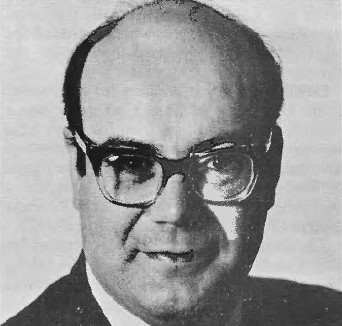 David Campton (1924–2006) was a prolific British dramatist who wrote more than a hundred plays and sketches, as well as work for radio and television. Born in Leicester, he became closely associated with Stephen Joseph and the development of theatre-in-the-round at Scarborough. The subtitle of Campton’s The Lunatic View inspired critic Irving Wardle’s influential term “comedy of menace”, frequently applied to Campton’s early work and that of Harold Pinter.
Two of his plays appeared in the New Plays Festivals: Don’t Wait for Me in 1963 and The Life and Death of Almost Everybody in 1970. The latter became one of his most widely performed works.
The Questors’ Student Group subsequently presented his play The Cagebirds in 1985.
THE PLAY
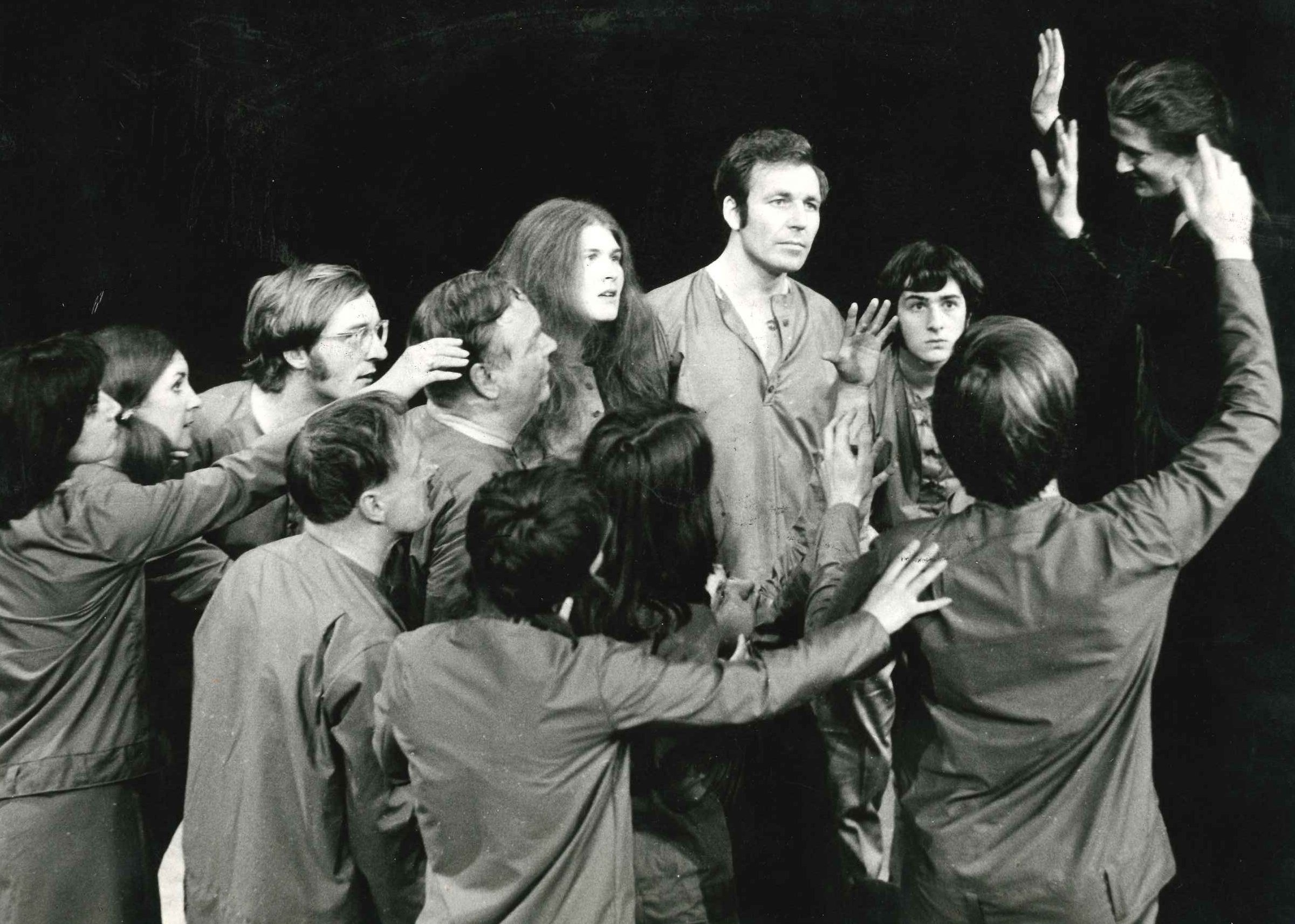 The play begins with a bare stage and a solitary Sweeper, who functions as both stagehand and creator.
Discovering that imagination itself has the power to bring theatrical life into existence, he first conjures trivial objects and animals before creating a Young Man and Young Woman.
What starts as an innocent act of creation rapidly escalates. More and more figures appear until the stage contains an entire miniature society.
The Sweeper, originally an amused observer, gradually loses control over his own creation. The people he has imagined cease to behave as he intended and begin shaping their own destinies. The play charts the emergence—and eventual decay—of civilisation in compressed, allegorical form, suggesting that humanity repeatedly recreates the same patterns of ambition, division, intolerance and destruction.
PRODUCTION PHOTOS
PRESS RESPONSE
David Campton's ambitious theatrical allegory emerged as the most warmly received play of the Festival. Reviewers praised its originality, wit and imaginative treatment of humanity's moral and political history, with The Stage describing it as one of Campton's finest works and suggesting that, with some tightening of the second act, it could become "a little masterpiece". Frank Cox likewise regarded it as the most technically accomplished of the three plays, while Amateur Stage admired its rich theatrical invention and intellectual confidence despite identifying a few structural weaknesses. The consensus was that Campton had produced the Festival's outstanding achievement, combining imaginative stagecraft with serious ideas and highly entertaining theatre.
Amateur Stage
The Stage and Television Today
Plays and Players
QUESTORS ARCHIVES
THE LIFE AND DEATH OF ALMOST EVERYBODY