IN FOND MEMORY
TONY RUSHFORTH [d. July 2026]
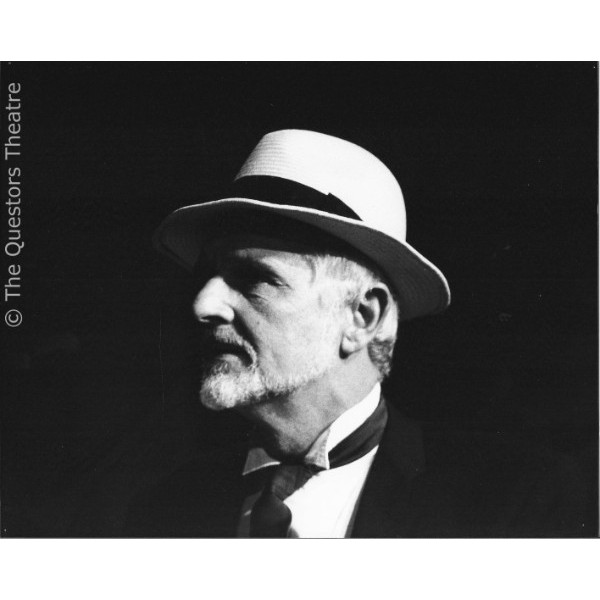
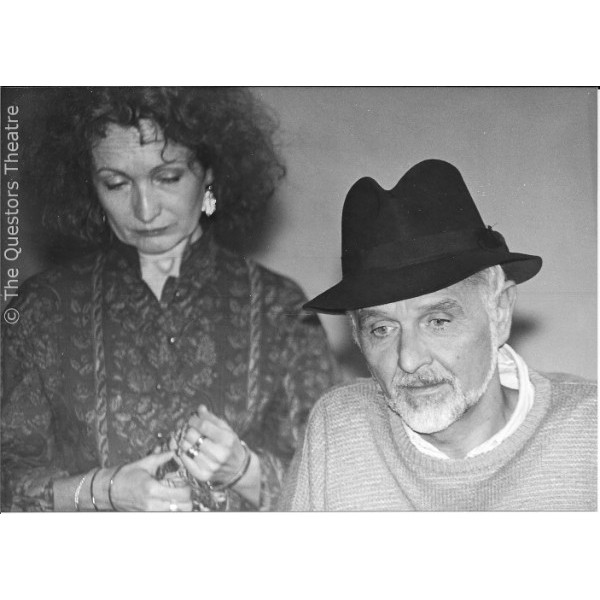
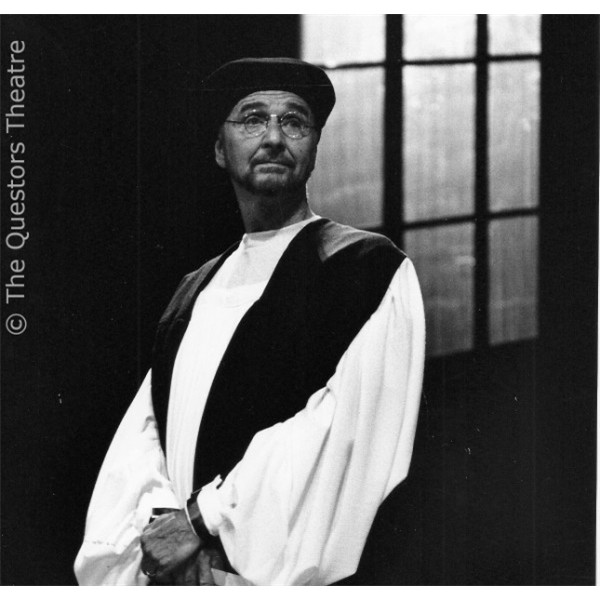
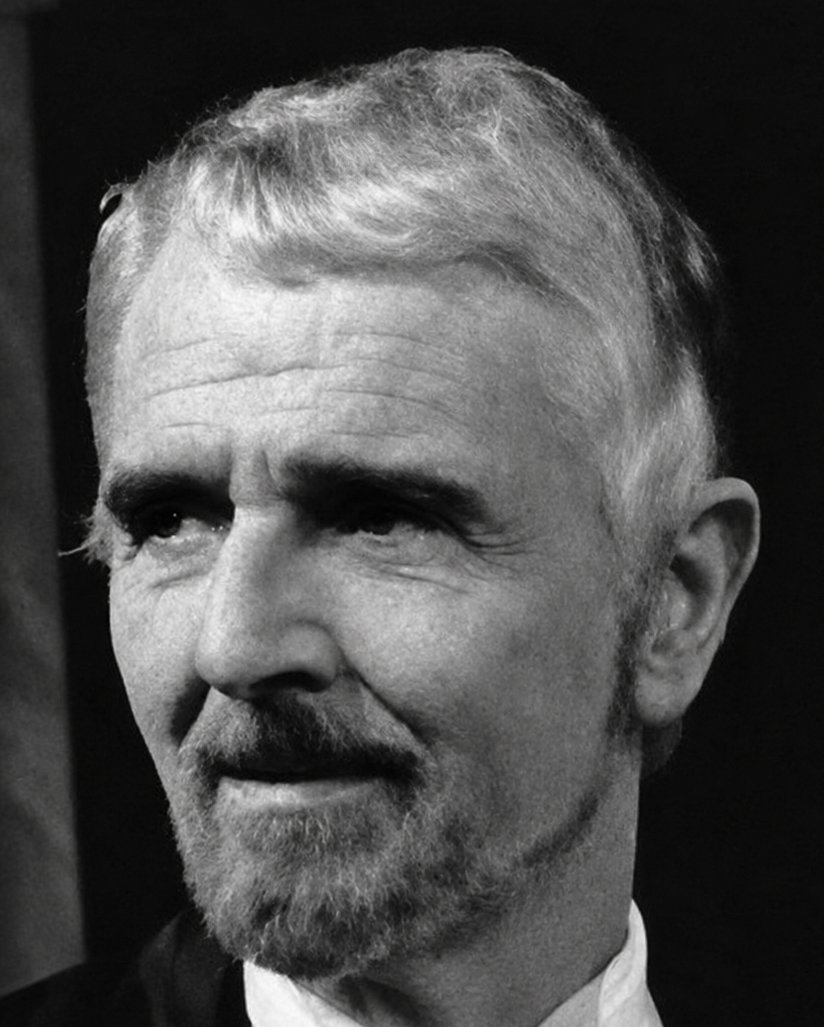 The death of Tony Rushforth at the age of 95 has robbed us of a much loved friend whose contribution to Questors has been enormous and wide-ranging. For more than fifty years he acted with us, directed us, wrote plays and took an important part in developing our international connections. He was also a gifted teacher whose influence went far beyond Mattock Lane.
Tony trained at the Central School of Speech and Drama and began his professional career with Harrogate Repertory Company. He directed at Bradford Civic Playhouse, the Ashcroft in Croydon and the Georgian Theatre Royal, Richmond and combined this practical experience with a long academic career, serving for twenty years as Head of Drama at St Mary’s College, Strawberry Hill.
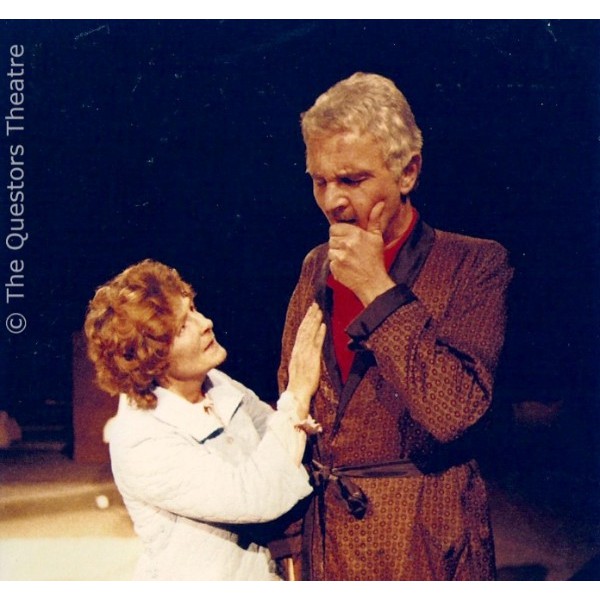
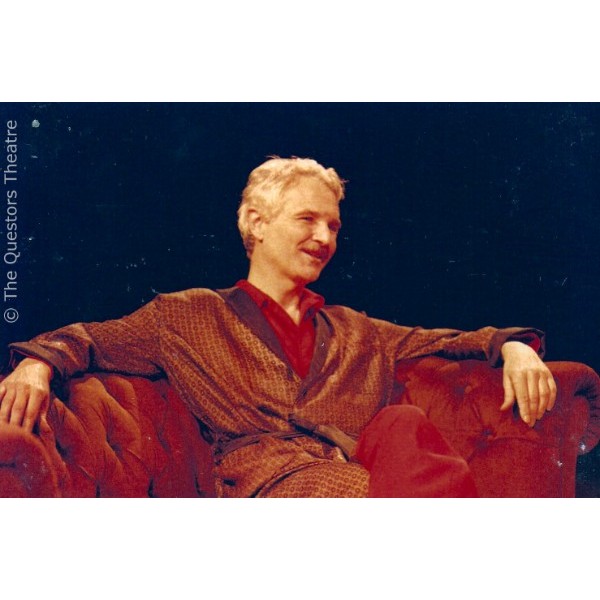
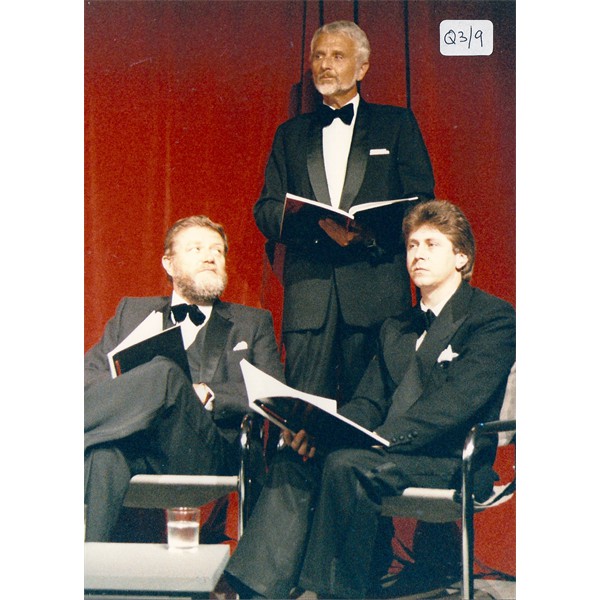
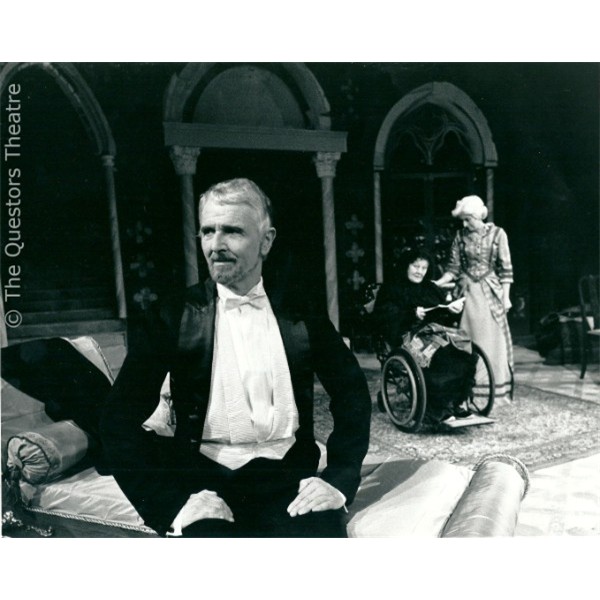
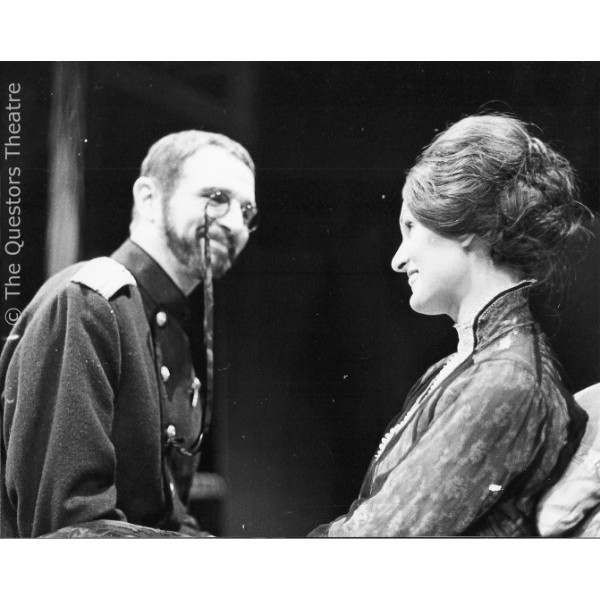
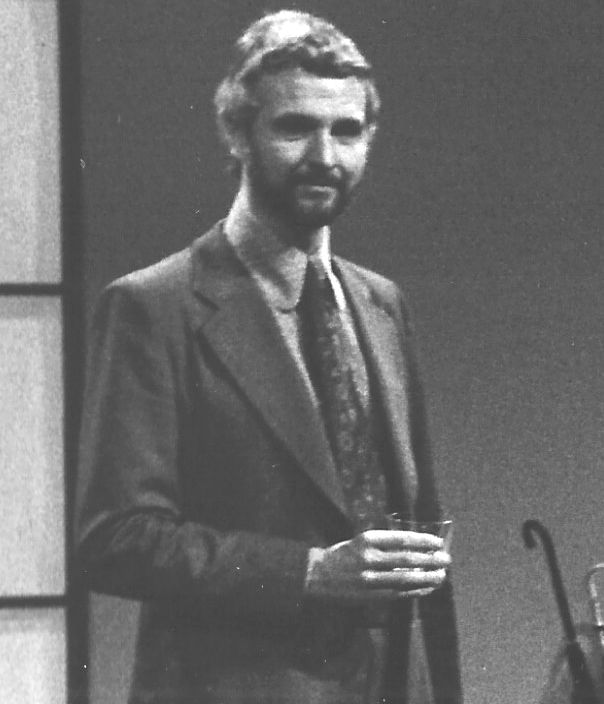 His first appearance at The Questors was in 1974 in T. S. Eliot’s The Cocktail Party. Over the next few decades we saw him in numerous productions including Chekhov’s Three Sisters and The Seagull, The Relapse, When We Are Married and The Aspern Papers, in which he played opposite Rachel Kempson. He’s remembered for the concentration, intelligence and exactness he brought to each tole, whatever its size. Keith Parry particularly recalled his “focus and attention to detail”, describing him as a great example to aspiring actors.
It was as a director, however, that Tony made his most sustained contribution to The Questors with over twenty memorable productions, all of which were remarkable for their depth, clarity and strong visual imagination. Howard Shepherdson, who twice auditioned for Tony without being cast, remembers that on both occasions he nevertheless came away feeling valued. He described Tony as “a real man of the theatre” whose work possessed unusual depth and integrity.
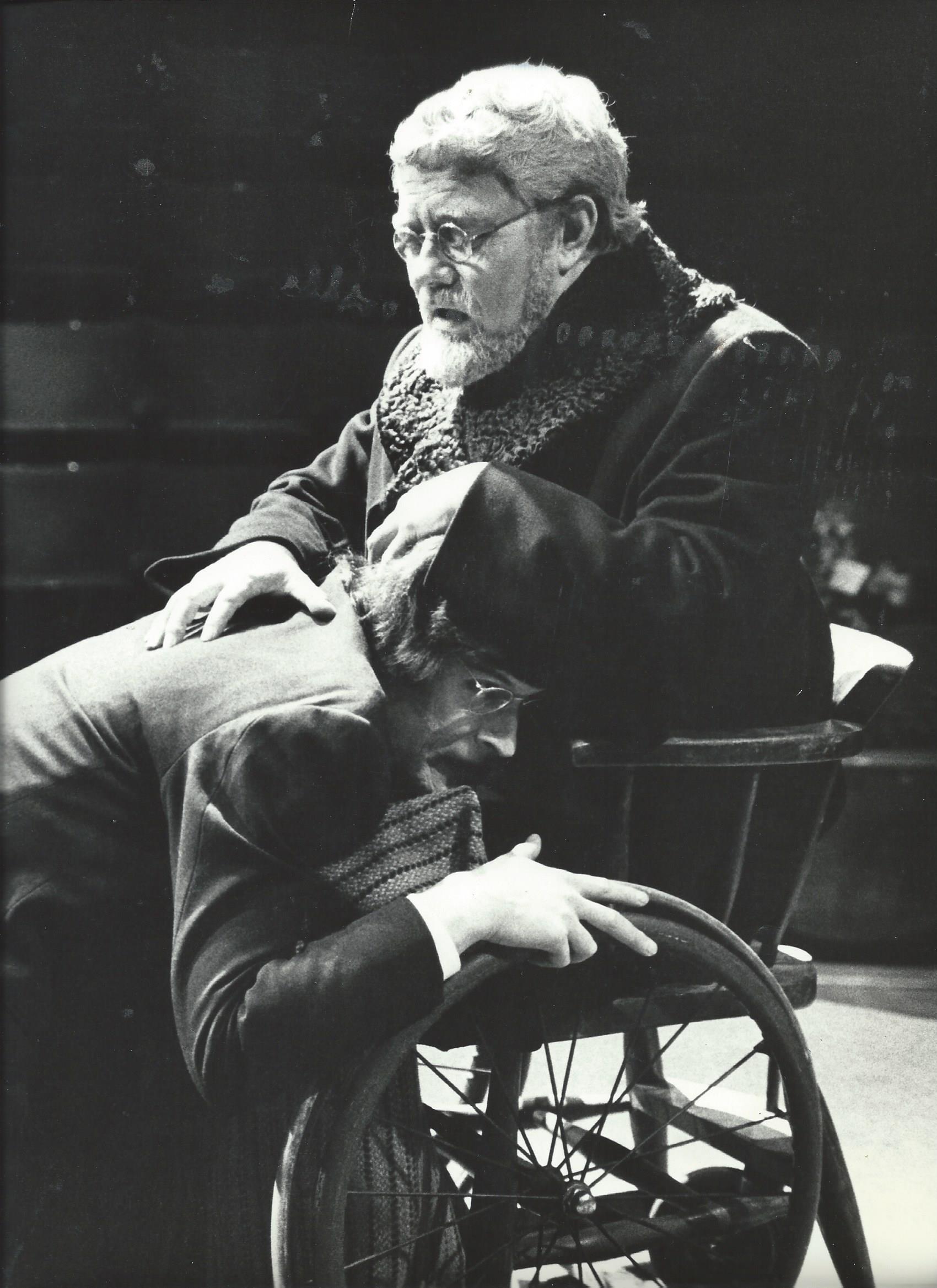 Tony’s outstanding achievement as a director was his promenade staging of Strindberg’s The Ghost Sonata. First presented in the Playhouse in 1979, it drew some of its inspiration from the innovative Hungarian company Studio K, whose work Tony had encountered during his international travels. When the production went to the Edinburgh Festival the following year, it became one of the Festival’s cult successes, playing to full houses in the atmospheric setting of a converted church in Morningside. The Scottish critics were enthusiastic: The Scotsman declared that “one feels that one has experienced the definitive performance”. A Few Drops of Water describes it as The Questors’ greatest artistic success at Edinburgh and as a landmark which introduced a new theatrical style to the company.
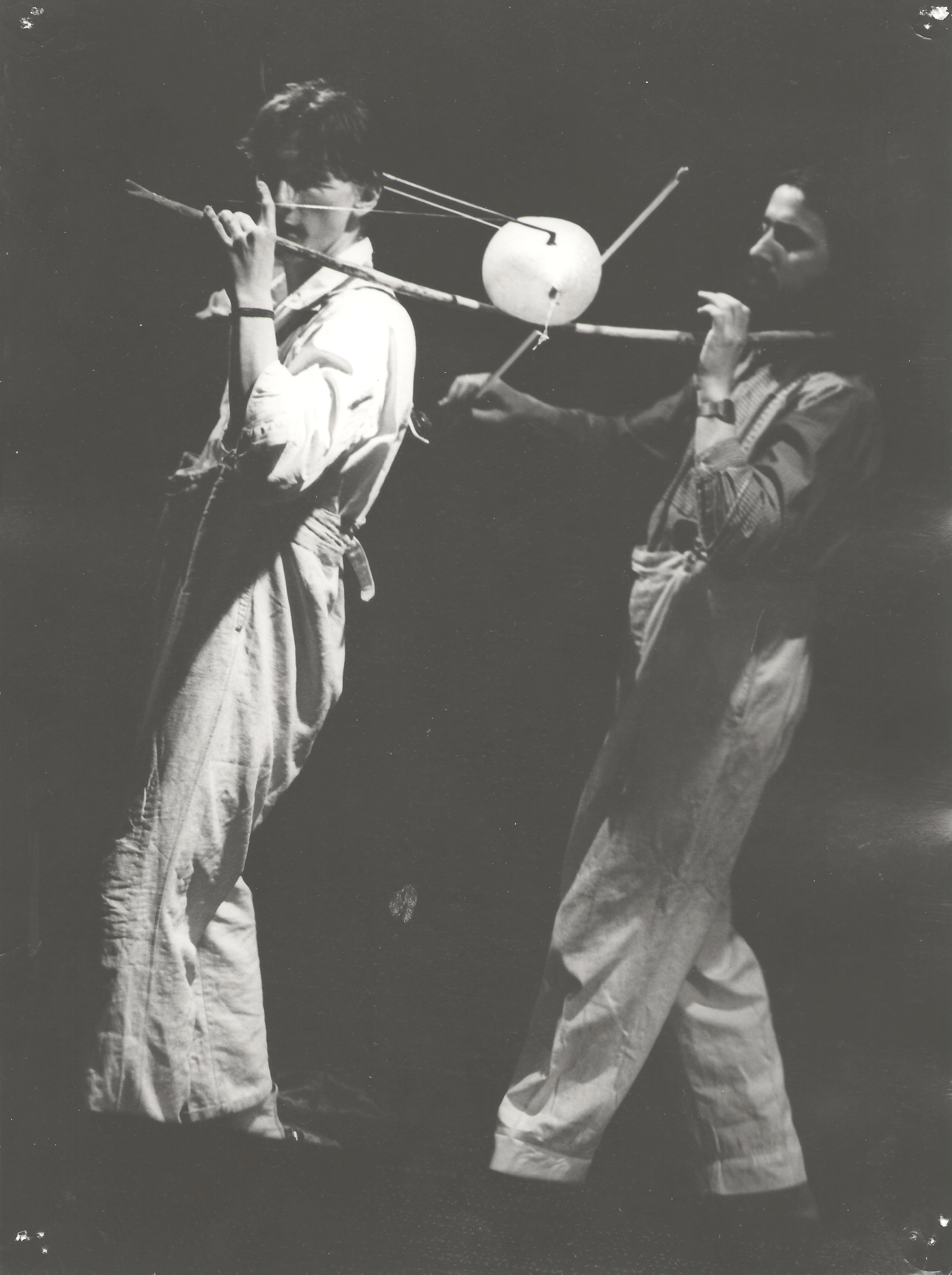 His international outlook found expression in his direction of the last two International Amateur Theatre Weeks held at Questors in 1979 and 1982, which brought companies from all over Europe to Ealing including adventurous ensembles from Hungary [photo], Sweden and Romania. Questors audiences had the opportunity to encounter theatrical traditions and techniques rarely seen in Britain at the time. Tony was particularly influenced by Teater Schahrazad from Sweden, who were arch exponents of Meyerhold’s theory of biomechanics, a system that Tony incorporated into his 1982 production of Hedda Gabler. His discerning choice of companies ensured that the International Weeks ended on “a splendid artistic high”.
Tony was also a playwright, and The Questors premiered a number of his works, including The Kerry Dance (1999) which drew affectionately on the Irish Catholic community of his Yorkshire childhood.
But for many Questors members Tony was much more than an actor, director and playwright. As Head of Drama at St Mary’s, he introduced many young people to the theatre and encouraged a number of them to join The Questors.
Anne Neville, whom he taught from 1974, recalls Tony giving her a ticket to see him perform in Chekhov at Mattock Lane and then encouraging her to become a member. He later directed her, acted alongside her and became, in her words, her “greatest support as a director”.
Paul Collins, whom he directed in The Seagull, remembers him as “charming, clear-sighted and supportive”.
David Emmet remembers being cast as a beggar in The Ghost Sonata. “But I got promoted to the Student (originally played by Robin Ingram) when it went to Edinburgh. I learned a lot from that, from Tony, and Nevile Cruttenden who played the Old Man, and indeed from Alfred Emmet, playing the Colonel, who gave me a lesson on objectives which I still relay to students every year in the Student Group. I remember, when having simulated sex with Mary Davies, I got a note from Tony to reach my climax faster!
Newcomers to The Questors experienced the same generosity. Alexandra McDevitt recalls the warm and supportive atmosphere Tony created during her backstage training on his 2005 double bill of Seascape and Charade.
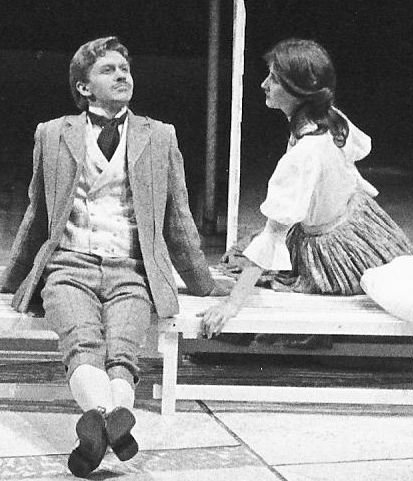 Harriet Parsonage remembers first meeting Tony in 1985 when he directed The Cherry Orchard [photo]. "I was an ASM. It was a start of a 40 year association. Over the years I did many shows with Tony (usually props) including several plays written by him and always thoroughly enjoyed the experience. He was a joy to work with; always polite and appreciative.
However my abiding and most amusing memory of Tony was his attention to the tiniest detail. The most insignificant household item was analysed to pieces. A sugar bowl would be the subject of a 20 minute conversation. I cannot look at a teaspoon without being reminded of him; he was a perfectionist.
Harriet Parsonage remembers first meeting Tony in 1985 when he directed The Cherry Orchard [photo]. "I was an ASM. It was a start of a 40 year association. Over the years I did many shows with Tony (usually props) including several plays written by him and always thoroughly enjoyed the experience. He was a joy to work with; always polite and appreciative.
However my abiding and most amusing memory of Tony was his attention to the tiniest detail. The most insignificant household item was analysed to pieces. A sugar bowl would be the subject of a 20 minute conversation. I cannot look at a teaspoon without being reminded of him; he was a perfectionist.
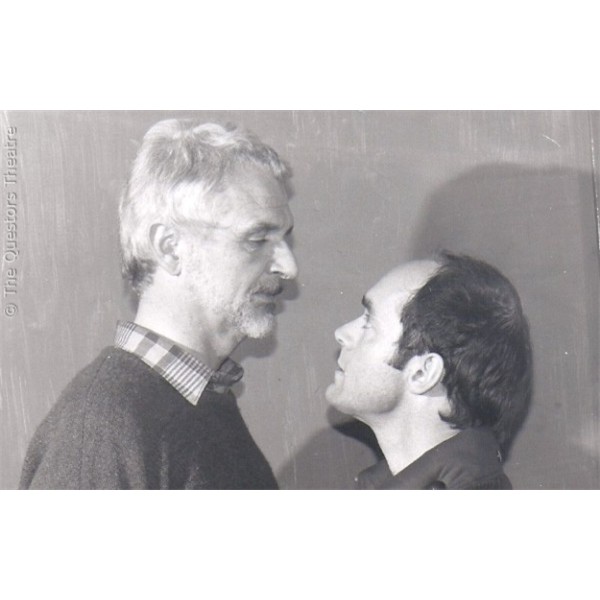
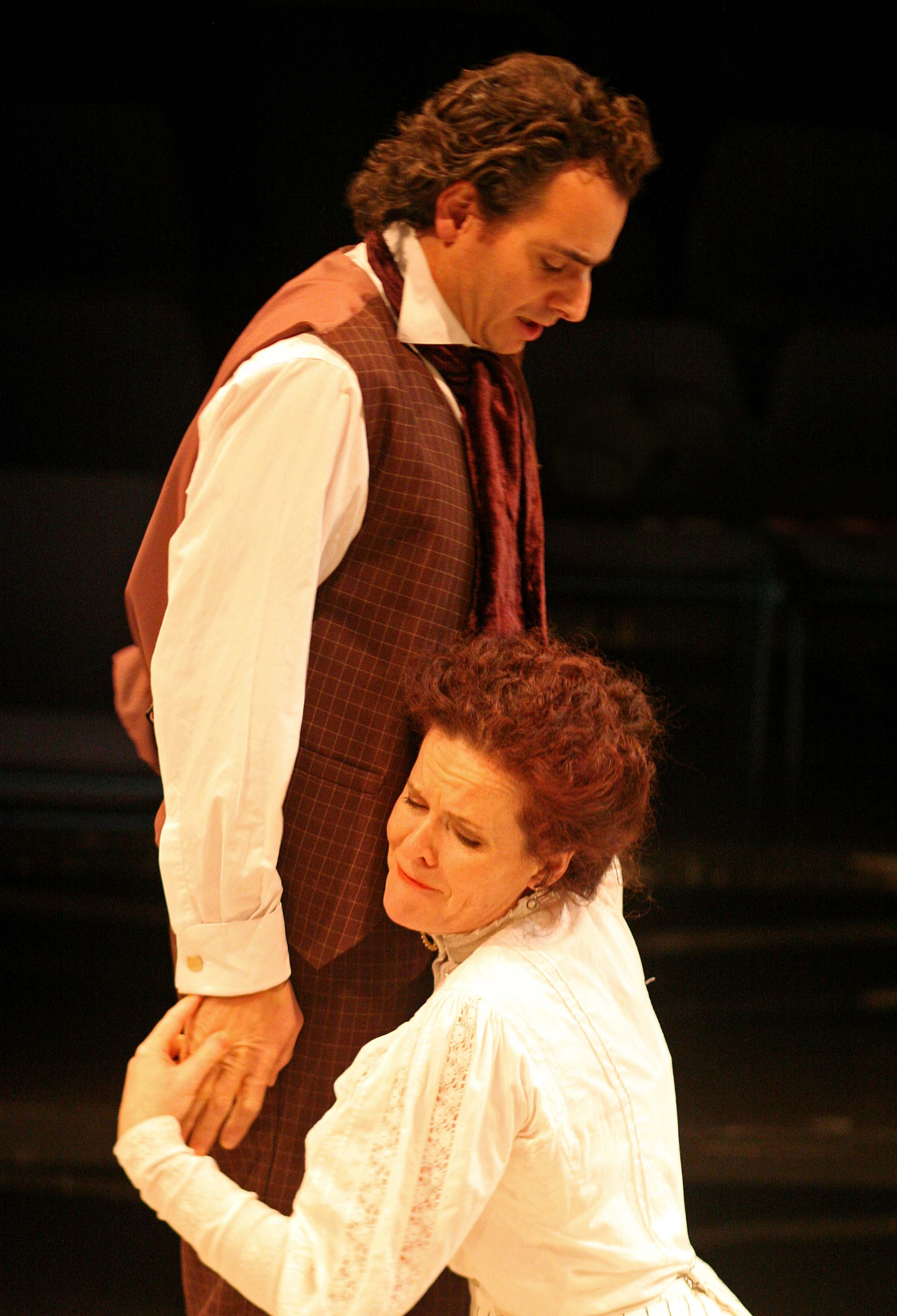 Mike Hadjipeteras recalls, during a rehearsal of the memorable production of The Seagull [photo], "I was playing Trigorin opposite Caroline Bleakley's Arkadina. It was set in the round. During a particularly heated, intense exchange between these two characters, Tony suddenly stopped us in mid-flow, wanting me to turn away and face the other end of the Studio space as he was worried the audience-in-the-round were seeing too much of Trigorin's back.
'But Tony,' I replied, 'we are having an intense moment and shouldn't I be facing her, looking into her eyes in order to persuade her?'
Tony gently and gingerly took me by the elbow to where he wanted me to go, 'Just to please your fans on the north side ... would you mind?'
I happily acquiesced."
Mike Hadjipeteras recalls, during a rehearsal of the memorable production of The Seagull [photo], "I was playing Trigorin opposite Caroline Bleakley's Arkadina. It was set in the round. During a particularly heated, intense exchange between these two characters, Tony suddenly stopped us in mid-flow, wanting me to turn away and face the other end of the Studio space as he was worried the audience-in-the-round were seeing too much of Trigorin's back.
'But Tony,' I replied, 'we are having an intense moment and shouldn't I be facing her, looking into her eyes in order to persuade her?'
Tony gently and gingerly took me by the elbow to where he wanted me to go, 'Just to please your fans on the north side ... would you mind?'
I happily acquiesced."
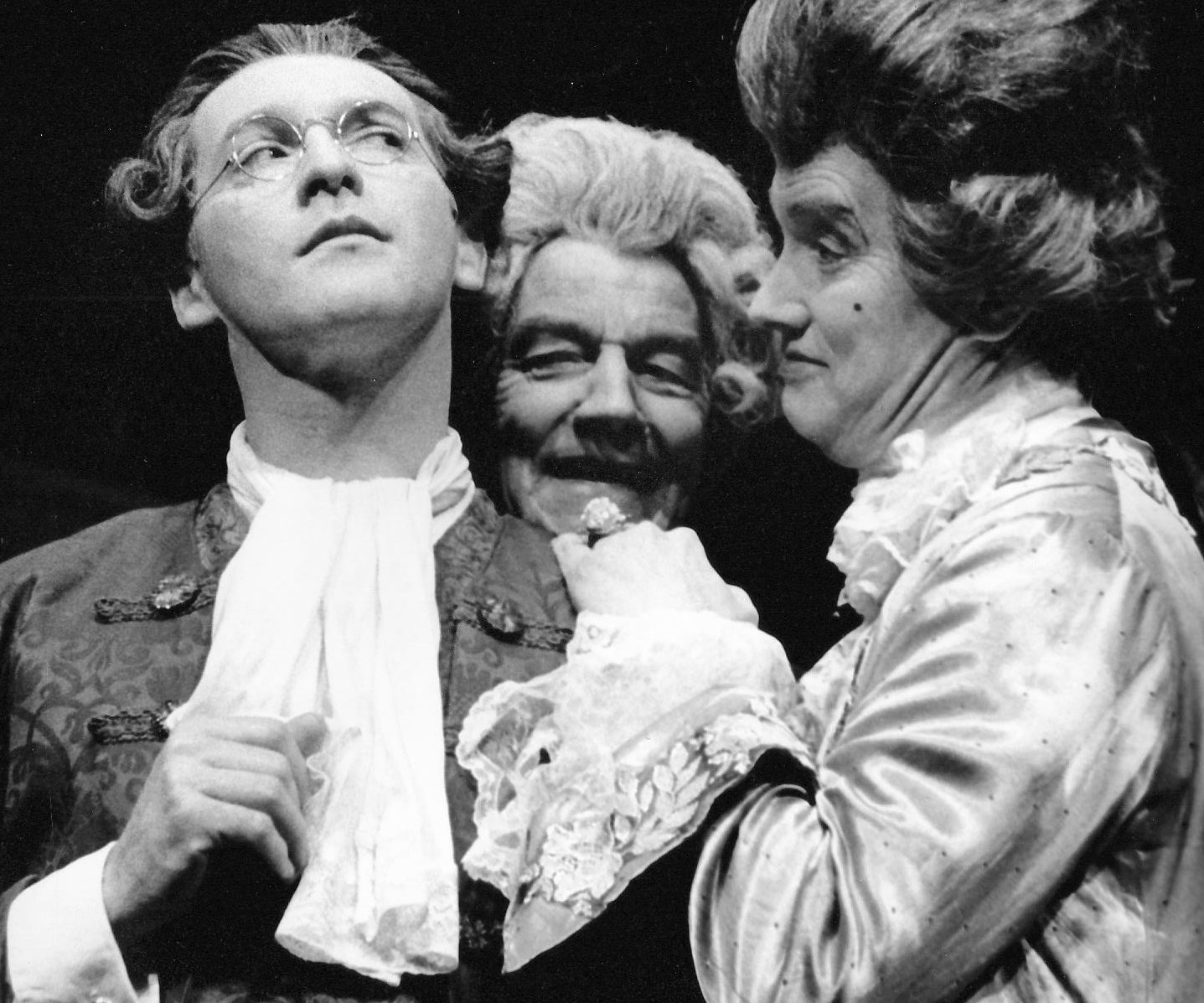 Francis Lloyd first met Tony when he joined Questors 30 years ago. "I only acted in one show that he directed -
Sheridan's School for Scandal [photo], which we took to the Georgian Theatre in Richmond. Tony was a meticulous director who prepared
every aspect of a play with enormous care. He was also great fun, and that trip to Richmond is one of my happiest memories.
His knowledge of theatre was encyclopaedic, and he was always encouraging and ready to help. When I directed R C Sherrif's little
known play, The White Carnation, he was quick to lend me valuable archive material from his lovingly preserved collection of theatre
albums. And of course, he had seen Ralph Richardson in the original production - in 1953.
I will miss his intelligence, his gentle humour and his great knowledge of theatre. But most of all, I will miss his kindness and his
generosity.
Francis Lloyd first met Tony when he joined Questors 30 years ago. "I only acted in one show that he directed -
Sheridan's School for Scandal [photo], which we took to the Georgian Theatre in Richmond. Tony was a meticulous director who prepared
every aspect of a play with enormous care. He was also great fun, and that trip to Richmond is one of my happiest memories.
His knowledge of theatre was encyclopaedic, and he was always encouraging and ready to help. When I directed R C Sherrif's little
known play, The White Carnation, he was quick to lend me valuable archive material from his lovingly preserved collection of theatre
albums. And of course, he had seen Ralph Richardson in the original production - in 1953.
I will miss his intelligence, his gentle humour and his great knowledge of theatre. But most of all, I will miss his kindness and his
generosity.
Although Iain Reid didn’t work on many of Tony’s productions, he got to know him well in the late 1970s. “I kept in touch with him closely in recent years. Simply, I really respected him and enjoyed the personal contact and conversation I had with him, which was unusually thoughtful, informed and eloquent, right up to the end. Sadly missed.”
Such recollections reveal the qualities underlying all Tony’s work: theatrical seriousness accompanied by warmth, courtesy and a genuine concern for those around him.
![1979 whenwearemarried 01 [Dave Smith]](data0/images/1979_whenwearemarried_01_dave_smith.jpg "1979 whenwearemarried 01 [Dave Smith]")