
QUESTORIES
Putting Life in Order: Michael Frayn at Questors
It's 1977 and three Questors actors are in an Edinburgh pub discussing an idea for a play. What if the audience could see what was happening behind the scenes as well as what was going on onstage? Perhaps half of them could be watching from the front and half from behind, changing places at the interval. The possibilities get more exciting as the conversation grows louder. Then Richard Gaunt notices a man nearby with a notebook.
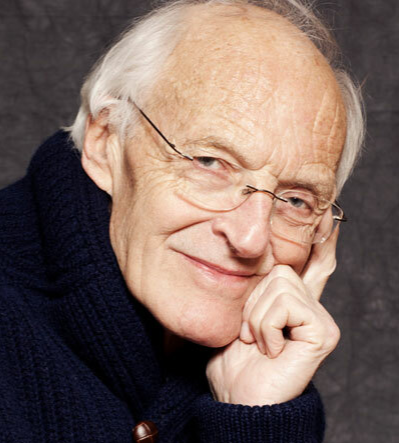
Years later, preparing for his 1996 production of Noises Off, Mike Langridge remembered this pub chat with Richard Gaunt, John Turner and himself and wondered if the man with the notebook hadn't been listening in on their idea. Michael Frayn's extraordinary backstage farce had it all!
But Michael Frayn had of course thought of it first. He dates his original inspiration to 1970, and a short preliminary version to 1977. But great minds think alike and the desperate ingenuity of actors trying to conceal a catastrophe had been the inspiration for Mike Green's Art of Coarse Acting, which had been in print since 1964, leading to the first World Coarse Acting Championships at Questors in 1972.
Alphabetical Order (1978)
Our first close encounter with Michael Frayn was in June 1978, with The Questors production of Alphabetical Order, directed by Alan Wareing with a beautifully cluttered set designed by Beth Cowley.
The people who work in Frayn's provincial newspaper office are as muddled and confused as their chaotic filing system. Buried under the general disorder are disappointed ambitions, fears about retirement, loneliness and vulnerability. Lucy the librarian offers them a comfortable refuge—until Leslie arrives, bringing the prospect of efficiency.
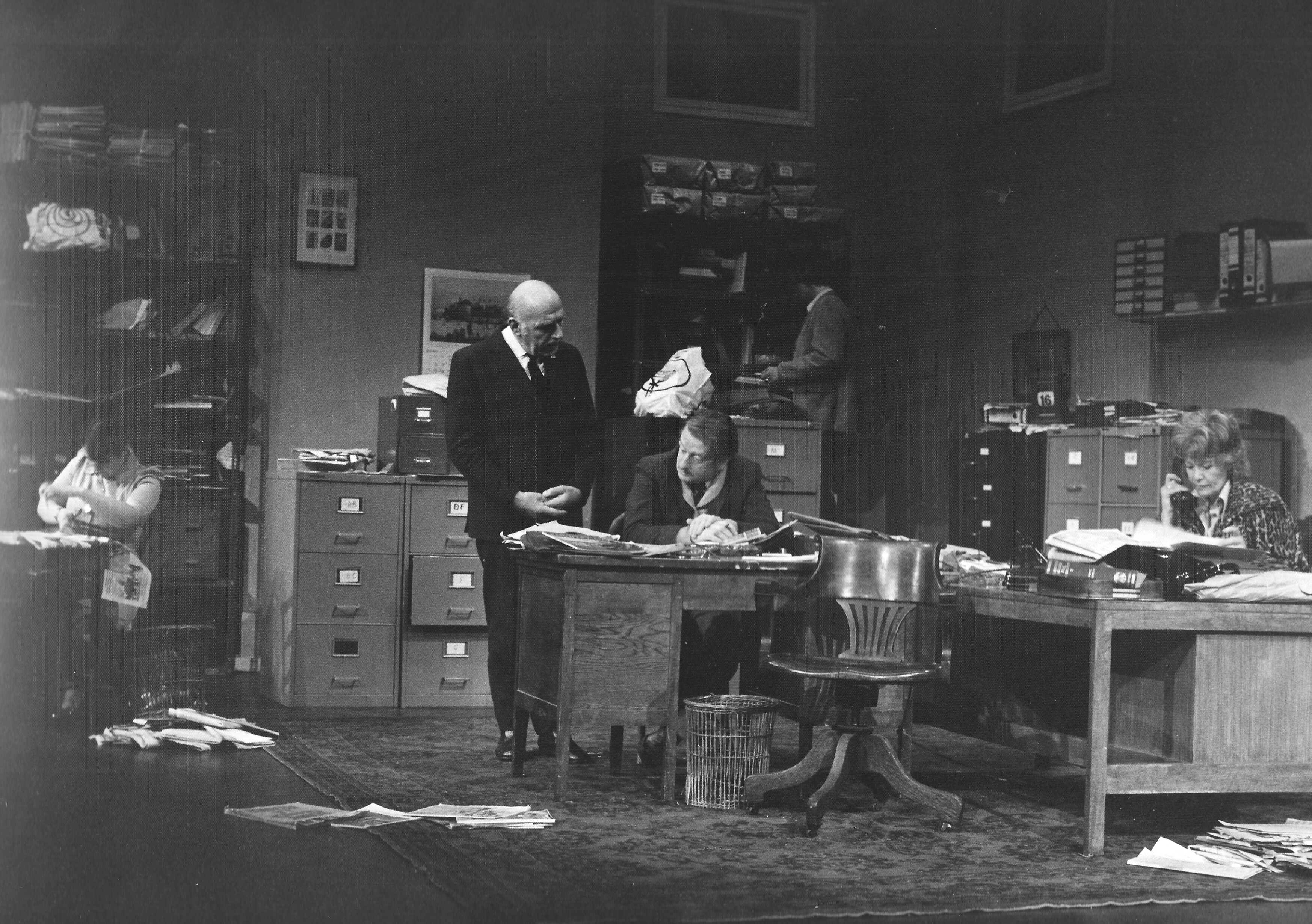
The production seems to have caught the mixture of comedy and sadness particularly well. Kitharistes (reviewing the production in Questopics) considered the cast to be one of the best he had seen at The Questors—Cilla Bazley as Lucy, Carla Field as Nora, Rosemary Parry-Jones as Leslie with Ned Gethings, Kevin Buxton and John Kearns completing a truly ensemble company.
There was some debate as to the play's seriousness. Geoffrey Howard, in the only surviving press review, enjoyed the comedy but questioned Frayn's conviction when looking more closely at the newspaper people. Kitharistes saw the key philosophy of the play as "impose too much order and the warmth of human relationships disappears".
Both reviewers enjoyed the final eruption of disorder. Kitharistes even thanked the people responsible for picking up the paper afterwards.
QUESTORS ARCHIVESALPHABETICAL ORDER (1978)
Clouds (1981)
Annie Kimber's fascination with Michael Frayn came from her reading of his philosophical book "Constructions". She approached Clouds, which she directed as a Questors Studio production in December 1981, as a theatrical exploration of people's attempts to make sense of an apparently chaotic world, with language being an uncertain means of communication.
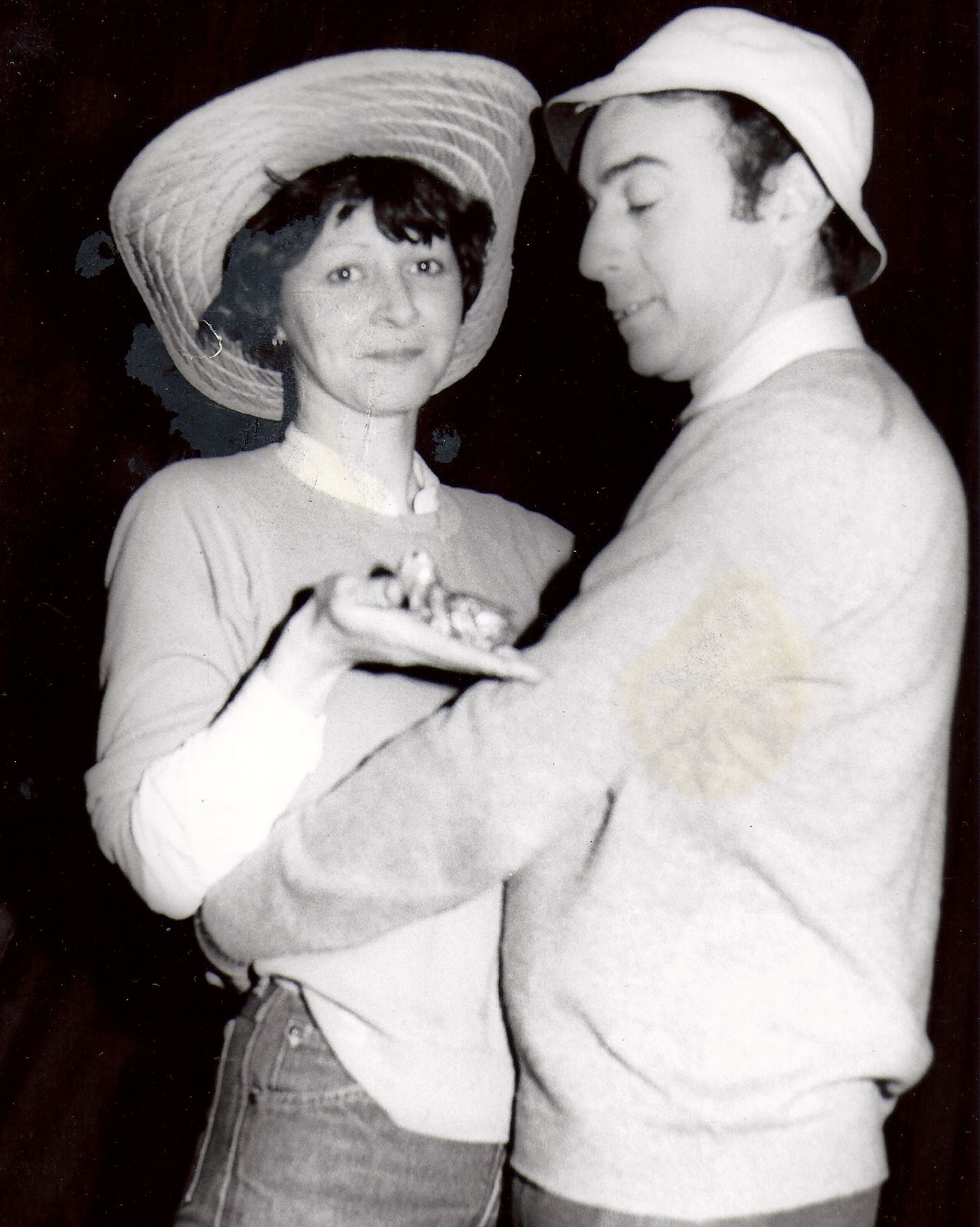
The play is set in Cuba where a journalist, a novelist and an American academic are travelling with an interpreter and a driver. Everything is misread or misunderstood. Nothing is what it seems to be. Even the scenery participates: chairs become a car and then become chairs again.
The production, which included Frank di Rienzo, Patsy Willis, Phillip Sheahan, Ian Pinkerton and Lennox Thomas in the cast, involved an enterprising search for props: newspapers from the Cuban Embassy, a borrowed goose caller and an ophthalmoscope from St Thomas's Hospital.
Kitharistes' review in Questopics was less enthusiastic this time. He admired what the actors had made of the play, but thought the material too thin.
QUESTORS ARCHIVESCLOUDS (1981)
The Cherry Orchard (Translation) (1985)
Michael Frayn translated all four of Chekhov's great late plays. He'd trained as a Russian interpreter during his National Service and when the National Theatre asked him to work on a Goldoni play using existing translations, he found he couldn't get a sufficient feeling for the original. He suggested a language he could actually read. First came Tolstoy's The Fruits of Enlightenment, followed in 1978 by his translation of The Cherry Orchard.
A master of elaborate farce and a proficient reader of Russian, Frayn recognised the craftmanship that underlay an entirely different theatrical genre and understood Chekhov's unique genius for blending sorrow with absurdity. His admiration also challenged the familiar notion that little happens in Chekhov. Behind the apparently casual conversations, he found every line advanced the drama.
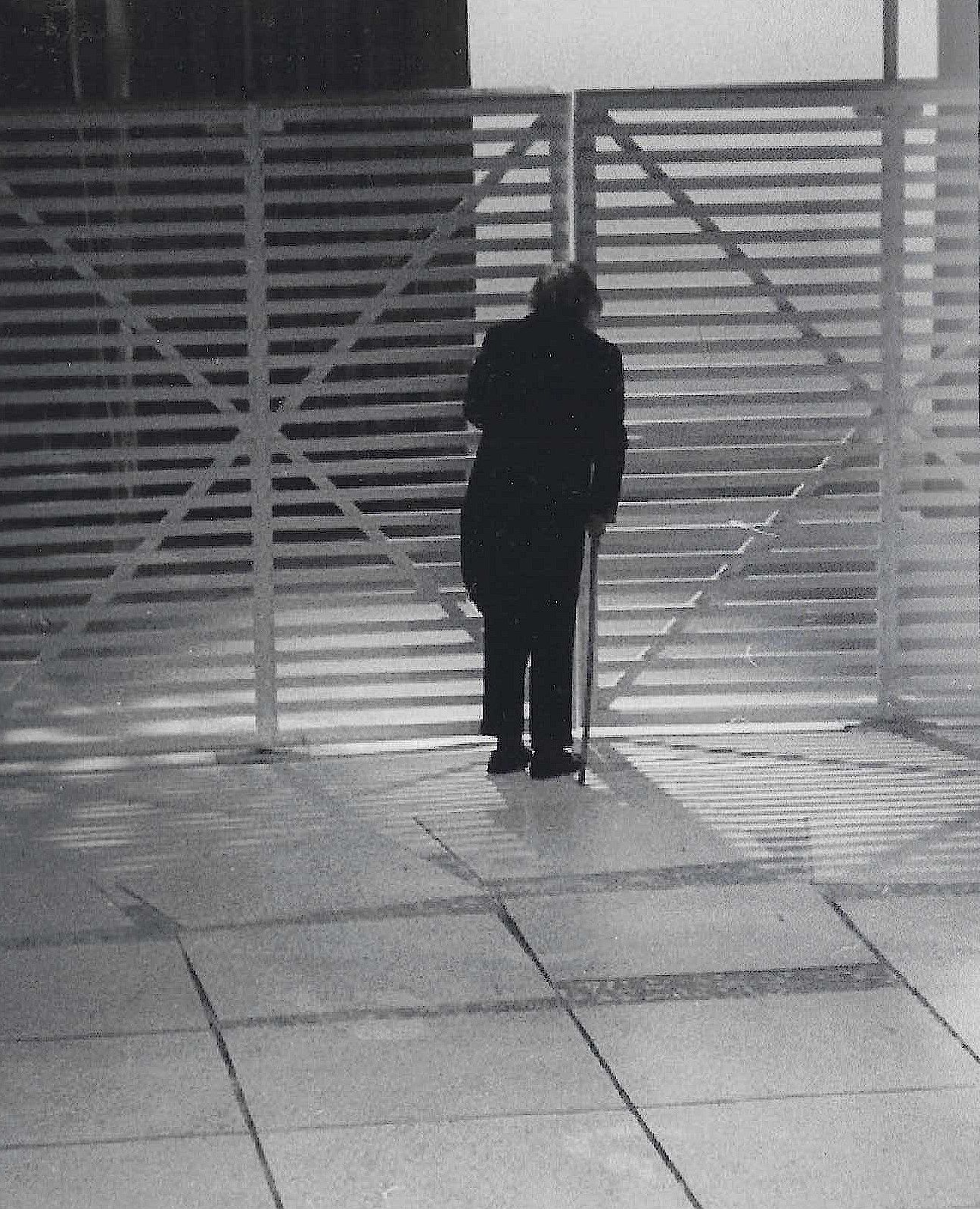
That makes Tony Rushforth's choice of translation for his 1985 production of The Cherry Orchard especially apt. Frayn's reputation for comedy was explicitly connected to the production's likely direction. After all it was Chekhov's own insistence that he had written a comedy, perhaps even a farce.
Reviewing the production in the Acton Gazette, Jack Hurlstone praised Ruth Lister's poise and grief as Ranyevskaya, and the laughter generated by Alfred Emmet (Firs), Phillip Clayton-Gore (Yepikhodov) and Sheila Tiffany (Ivanovna).
Davd Hiscock on, writing in Questopics, admired the spare staging and white drapes, and found the final abandonment of Firs (Alfred Emmet) deeply moving.
At Tony Rushforth's own suggestion, the final two evenings also offered a late-night revival of the Coarse Acting spoof The Cherry Sisters. Audiences were able to encounter Chekhov through Frayn, then watch Questors performers gleefully dismantle the conventions of Chekhovian theatre. Respect and irreverence proving to be perfectly compatible.
QUESTORS ARCHIVESTHE CHERRY ORCHARD (1985)
Benefactors (1988)
Land schemes and redevelopment entangled with people's hopes and dreams, one person's aspiration leading to another person's dispossession, these are Chekhovian themes that were echoed in our 1988 production of Michael Frayn's Benefactors.
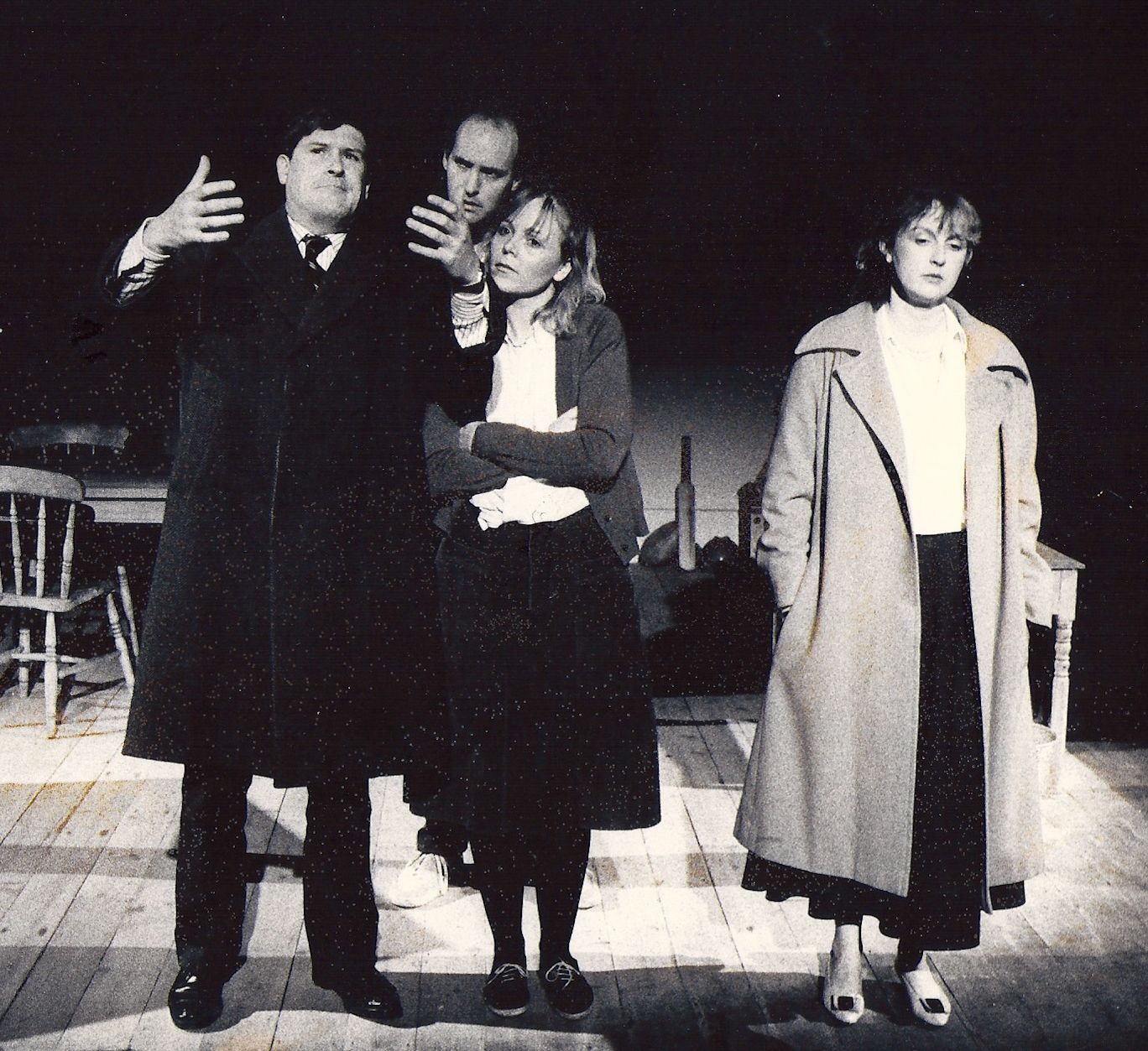
Here the focus is on architecture. A redevelopment project and the relationship between two couples allow Frayn to examine themes of generosity, dependence and destruction. Competing visions of modern housing—idealistic statements about tower blocks, angry testimony about living in them, and the collapse at Ronan Point—show that improving the world can look rather different on the drawing board than from someone's actual home.
John Horwood directed Robin Ingram, Fiona Nicholson, John Downs and Ceri Jones. The setting was designed by John Horwood and Tessa Curtis.
Reviewing the production in Questopics, David Hiscock found Frayn's interruptions of the action with narration absorbing but emotionally frustrating. But his admiration for the production was much less qualified. It was virtually flawless and he thought the performances might have made it The Questors' best work of the year so far.
QUESTORS ARCHIVESBENEFACTORS (1988)
Uncle Vanya (1994)
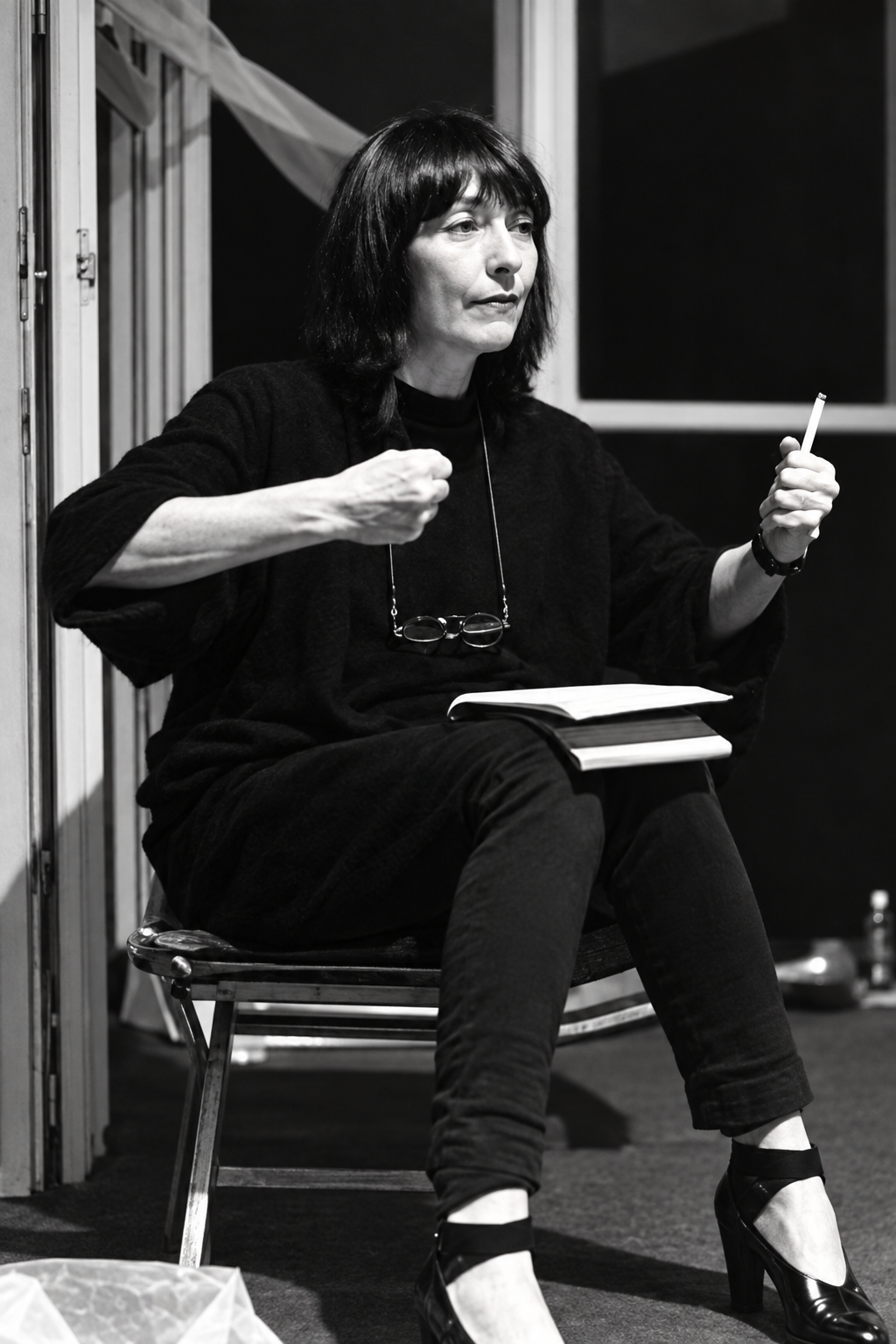
In 1994, Oxana Meleshkina, Artistic Director of the Moscow Centre of Visual Arts, returned to Questors to direct Uncle Vanya, in Michael Frayn's translation. David Pearson played Vanya, Frank Harling was Astrov, Sonia Pearson played Yelena and Margaret Turner took the part of Sonya.
Oxana had previously been our guest in 1992, directing Murray Schisgal's The Typist—after a great deal of hard work communicating with Moscow, dealing with visas and struggling with flight delays! This later visit seems to have been arranged more smoothly.
Oxana rejected the idea of Chekhov's play being a museum piece. She proposed Noah's Ark as the production's central image: a symbol of saving the world from destruction by changing life though individual effort and spiritual energy.
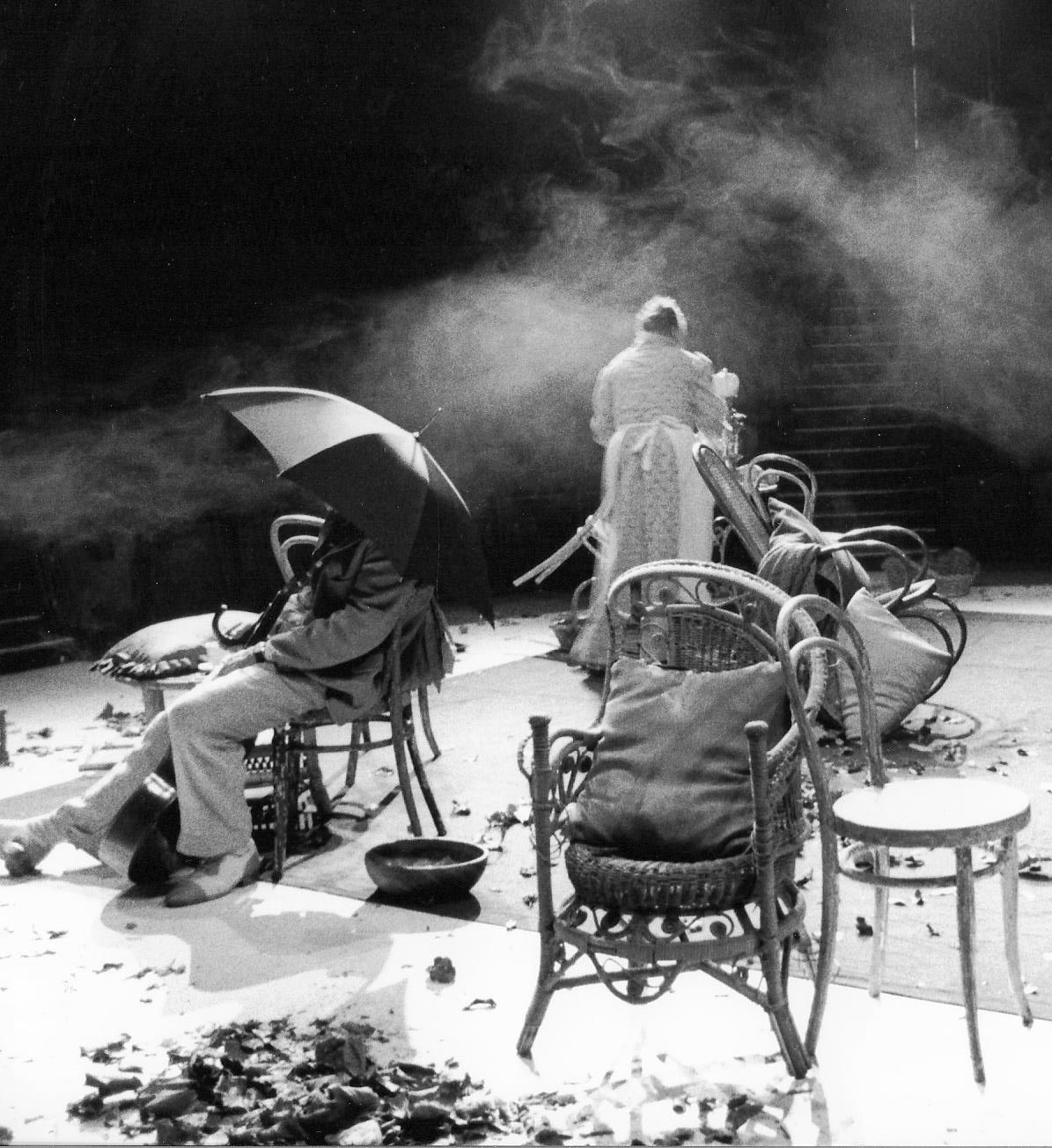
John Rolfe and Yevgeny Kulikov designed the production which was performed in the round, while Don Kincaid provided live music in the part of Telegin.
Hilary Potts, writing in Questopics, admired the carefully drawn relationships portrayed by the experienced cast but questioned the accumulation of sound effects and the difficulty of hearing dialogue in the round.
In September, the company took the production to Moscow. It was warmly received with two full houses at the Sfera Theatre. Thus collaboration between Russian and British theatre-makers had enabled Chekhov to travel, by way of Frayn's English translation, back to a Russian audience. Which neatly illustrates a translator's role in theatrical exchange.
QUESTORS ARCHIVESUNCLE VANYA (1994)
Noises Off (1996)
Two years later (1996) we were back in our own theatre with Mike Langridge's production of Noises Off with Gillian Kerswell, Robert Staines, Simon Higginson, Lisa Milne Henderson, Sarah Morrison, Howard Benbrook, Caroline Bleakley, Anthony Curran and Norman Wilkinson—what a company!
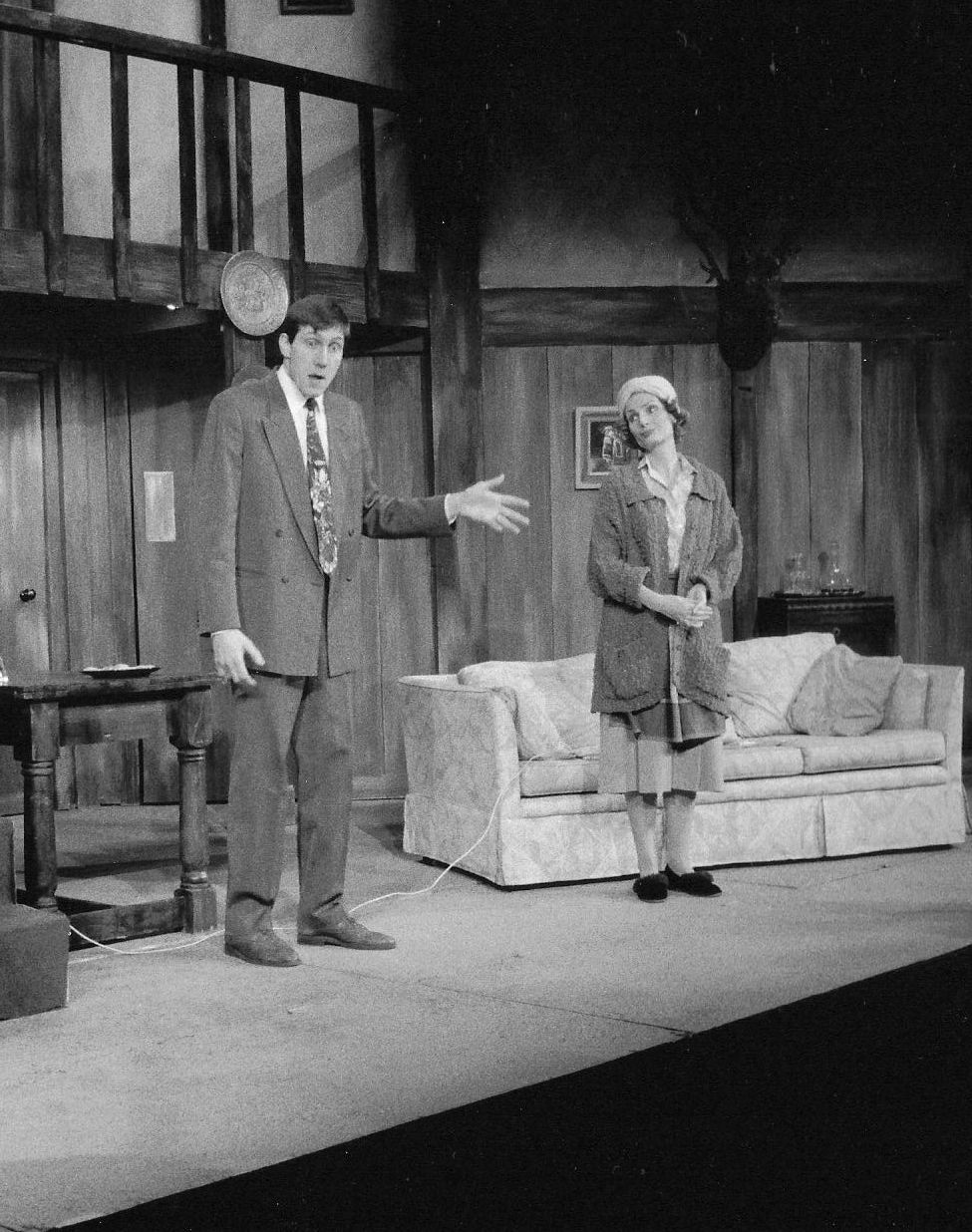
Frayn has set the audience (and the company) quite a challenge. They are asked not only to encounter three successive performances of the farce "Nothing On" but those performances are themselves framed in another farce as we watch the increasingly destructive private drama behind the scenes. Anyone who has waited for an entrance, searched for a personal prop or depended on a colleague's cue can recognise how scary that can be.
And of course this was the wild idea Mike and his friends had dreamed up in the Edinburgh pub all those years ago—but writ larger and with more devastating farcical effect. And let's not forget the obvious undercurrents of Michael Green's world of Coarse Acting.
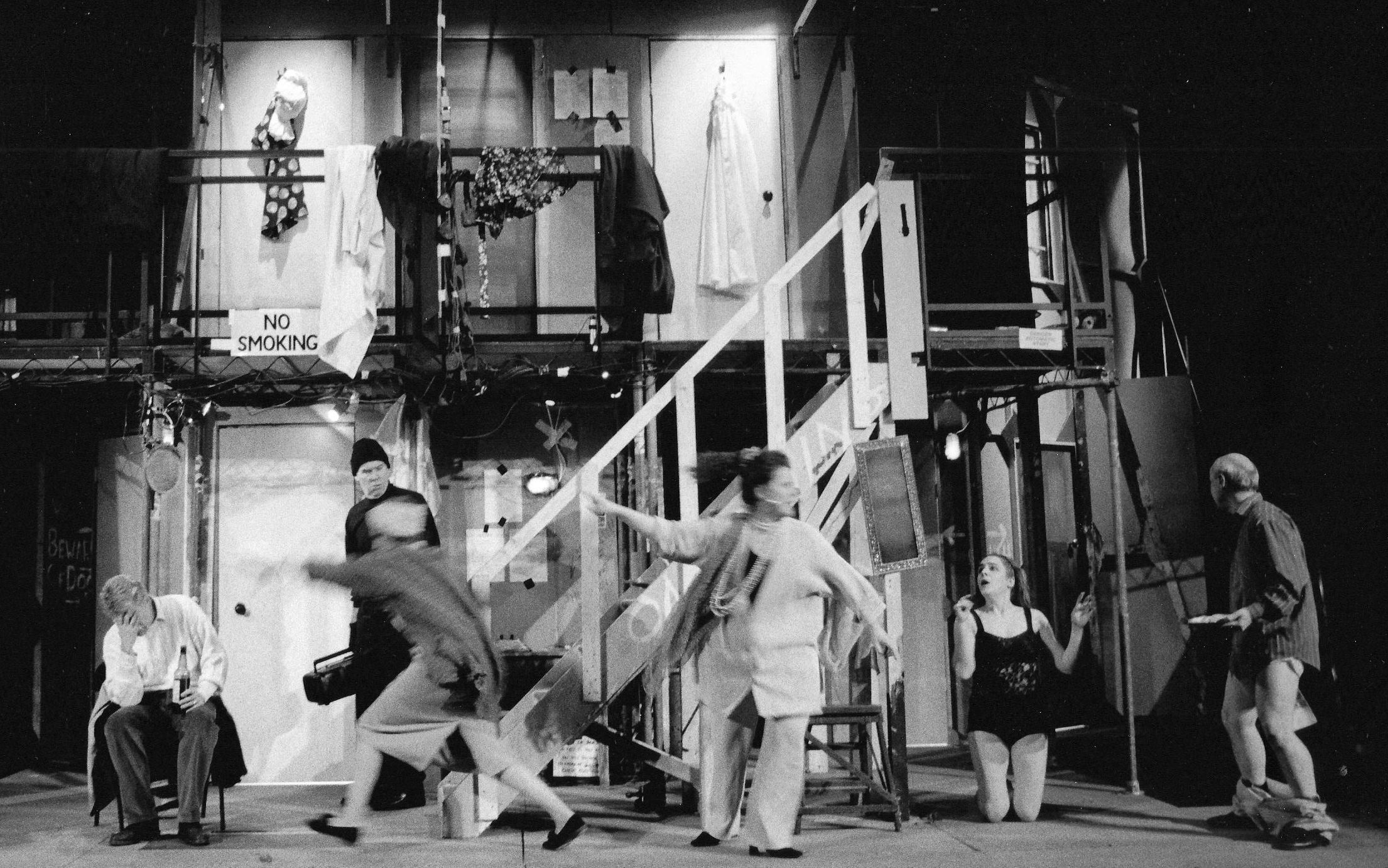
Reviewing the production in Questopics, Peter Knight praised the speed, energy and commitment of Langridge's cast. He also gave credit to the designers—Jenny Cooknell, Nick Hawker and John Horwood—and a stage crew of more than thirty under the skilful leadership of Stage Manager Katy Gallantry. The second-act set change, he thought, was itself worth the admission price.
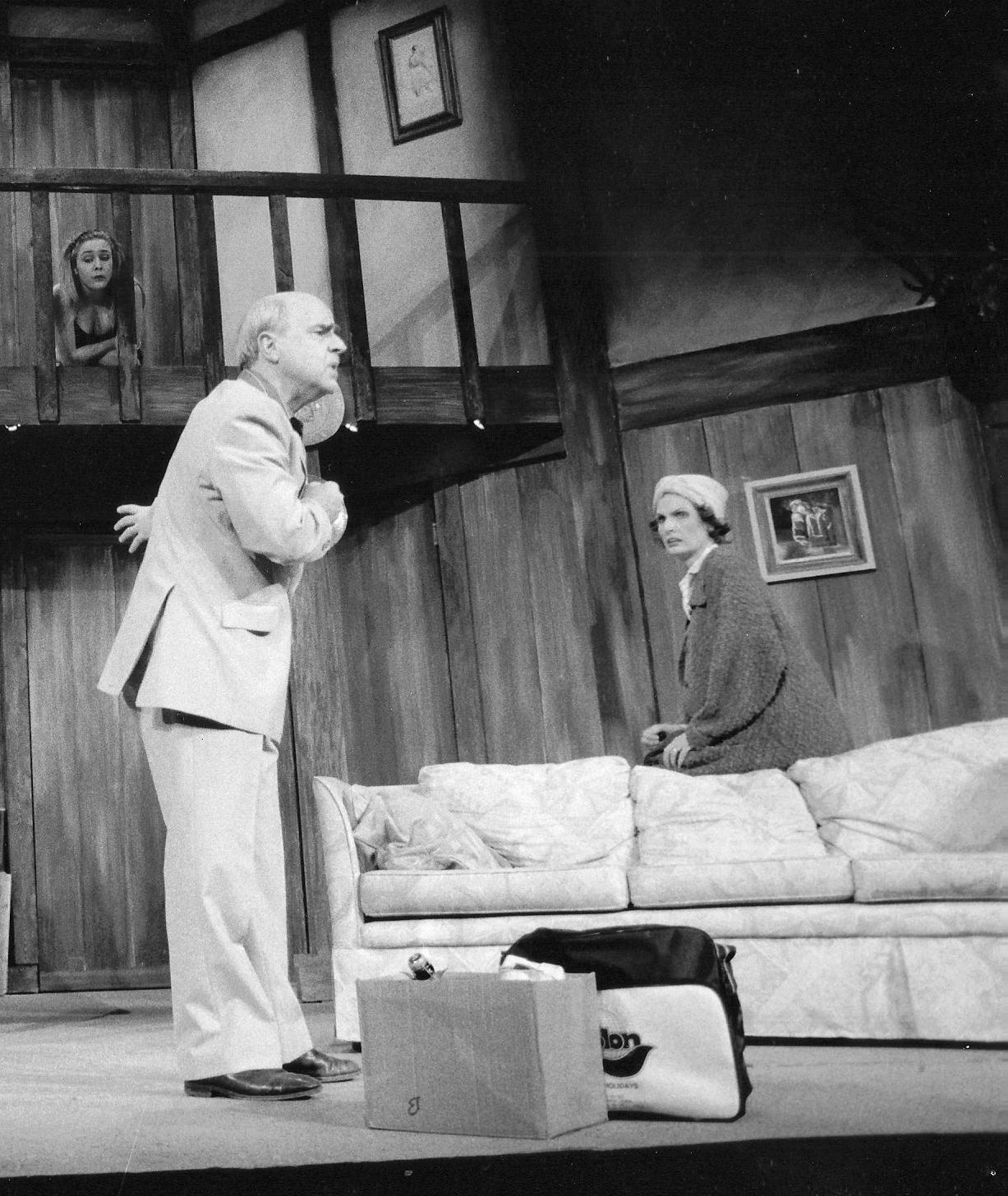
Simon Higginson remembers that set change to this day. He recalls that at the first technical rehearsal it took some twenty-five minutes; under Katy Gallantry and her stage-management team it was eventually reduced to about three, earning its own round of applause each night. He also remembers Mike Langridge's programme notes for the characters—particularly the claim that Garry had twice won the Rose Bruford "medal for effort"—and Caroline Bleakley's stepping in when Amanda Bernstein had to drop out.
Howard Benbrook's memories are more physical. He remembers the sheer fun of attempting a distinctly Brian Rix-like piece of stage business: running upstairs with a tax return glued to one hand and a plate of sardines in the other, while somehow contriving for his trousers to fall down at precisely the right moment. He describes mastering it as perhaps the pinnacle of his acting career—and suspects that somewhere among his possessions one of the original sardines may still survive.
This is an appropriately Frayn-like memory. Behind the apparent chaos lay formidable precision, both onstage and off. Peter Knight's most revealing observation was that all this theatrical anarchy still left the audience caring about the characters. The human element survived the machinery. For all the doors, trousers and sardines, Frayn had given the actors real people to play.
NOISES OFF (1996)
Uncle Vanya (2015)
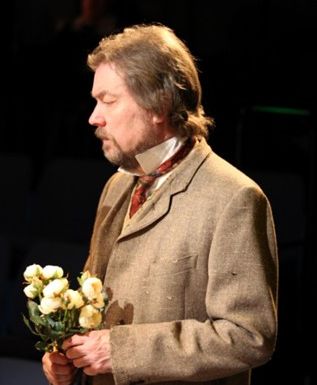
March 2015 brings us back to Frayn the translator of Chekhov with John Davey's studio production of Uncle Vanya. John had been associate director with Oxana Meleshkina for the 1994 production. This time he chose to keep the play firmly in its original Russian period and setting.
In his programme note John drew attention to Frayn as a translator who knew Russian. And in an interview for the Hampstead Theatre in 2015, Frayn spoke of the way writing novels and plays changes his view of each form, with Chekhov as an example of the traffic between storytelling and drama. His relationship with the Russian writer belongs within his creative life, rather than at its margins.
John Davey went on to discuss how, in Uncle Vanya, the painful comedy mingled pathos with humour, all of which was presented with great intimacy in this studio production. Francis Lloyd was Vanya with Lisa Varty as Sonya and Simon Roberts as Astrov. The rest of this memorable cast included Alan Waldock, Sarah Morrison, Derek Stoddart, Cathy Wallace and Dotti Lawson.
QUESTORS ARCHIVESUNCLE VANYA (2015)
Across our seven productions, we have met people organising their filing systems, misinterpreting strangers, planning new buildings, rescuing households and attempting to carry on with the show at all costs. Their various schemes collide with other people's desires. Sometimes the consequences are painful; sometimes they are gloriously funny; often they are both.
As Noises Off returns to The Questors, we can enjoy the familiar prospect of theatrical chaos. We can also look back on nearly four decades of encounters with Frayn as playwright and translator, and his very human understanding of how difficult it can be living alongside each other—and how very funny! .
John Dobson
September 2026