
QUESTORIES
A Lot to Talk About:
Brian Friel At The Questors
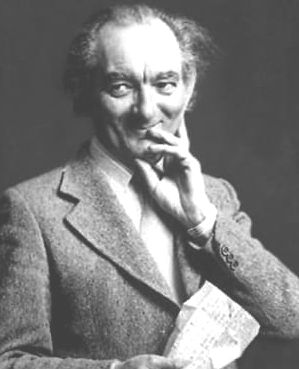
“This is a play which ought not to work.” That was how Questopics introduced our first production of Faith Healer in December 1992. Hardly any action, no agreed version of events, and four monologues delivered by three actors. On paper, perhaps, a doubtful proposition. In the theatre, something else entirely. With Faith Healer returning to our Studio this October, it seems a good time to look back at The Questors’ encounters with Brian Friel. Four full-length plays and a short excursion into Chekhov have taken us from an itinerant healer’s precarious livelihood to a Donegal kitchen, an Irish hedge school and a woman’s unsettling discovery of sight. They have also taken a small Questors company on a trip to Lithuania. Along the way, Friel has asked a great deal of our actors and audiences. His characters can be wonderfully entertaining company, but their stories seldom settle into a single, comfortable account of what happened. Listening to them is part of the drama. The body of text
Faith Healer 1992
Our first Friel production, Faith Healer, opened in the Playhouse on 5 December 1992, concluding that year’s European Season. Anne Neville directed, with Mike Langridge as Frank Hardy, Mary Davies as Grace and myself as Teddy, the Cockney manager who accompanies them on their travels. Mike Britton designed the setting and Martin Sapsed the lighting.
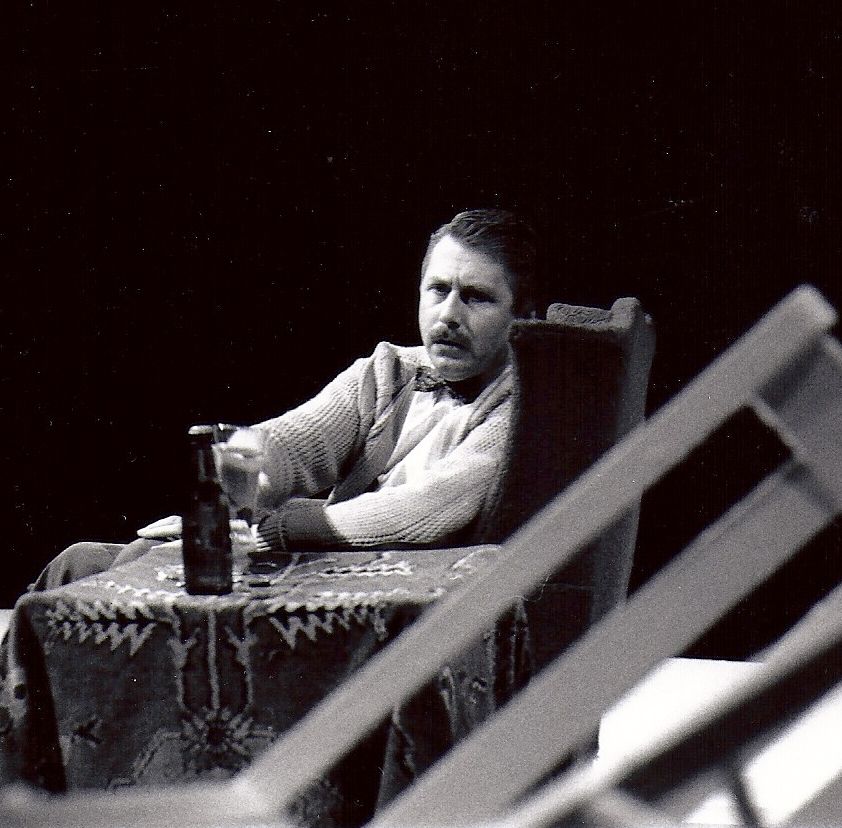
Playing Teddy was a particularly rewarding experience for me. Friel’s writing is so rich in character and humour it was a joy to inhabit the part. I know that Mike and Mary felt the same. Mary even said she had an “out of body” experience when performing it one night.
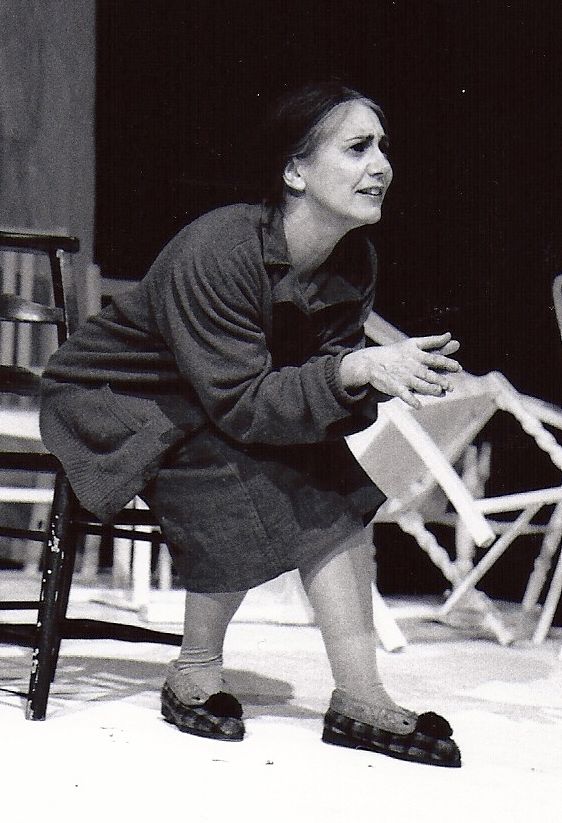
Reviewing the production in Questopics, Michael Gerrard began with an elaborate confession. He had hoped to emulate the great newspaper critics. He’d been practising his sneer in the rear-view mirror on the way to the theatre, and regretted not possessing an ivory cigarette holder. Within minutes of the opening, however, his critical posing had deserted him. He found himself transported into another world by “one of the finest productions that I have ever seen at The Questors”.
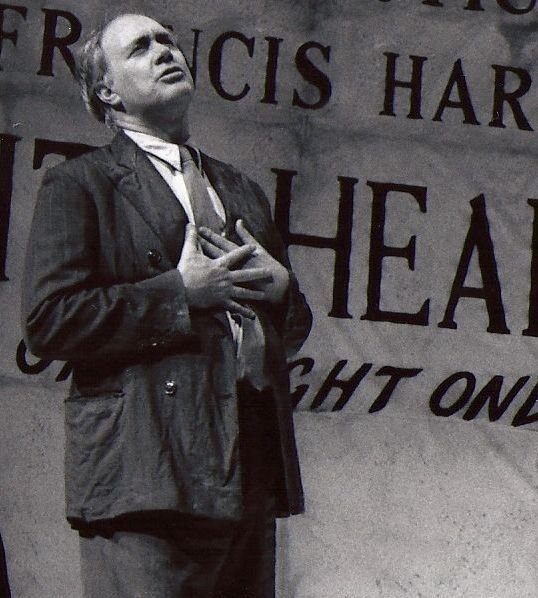
His most revealing observation concerned the relationship between the performers. Although they were never on stage together, they seemed completely to belong to the same play. That is no small achievement in Faith Healer. Each account must have its own conviction, while allowing the audience to recognise the shared life behind the contradictions.
Jonathan Haswell’s review likewise praised Anne’s command of the whole production, from the stark setting and sensitive lighting to the detail exposition of every word in the text. He saw in the play the unpredictable and sometimes destructive workings of artistic creation. Frank possesses a gift which he cannot reliably summon or explain; Grace and Teddy must live with the consequences.
Anne’s programme note had already drawn attention to this parallel between the healer and the artist. It also emphasised the power of Friel’s language: repetitions and rhythms which could make a bare stage hold an entire remembered world. For the audience, the work was to imagine that world while questioning the people who described it.
QUESTORS ARCHIVESTHE FAITH HEALER 1992
Dancing at Lughnasa 1995
Three years later Paddy O’Connor brought us to a very different world with his production of Friel’s Dancing at Lughnasa, which opened on 24 June 1995, with a setting designed by Tessa Curtis and Jim Caithness.
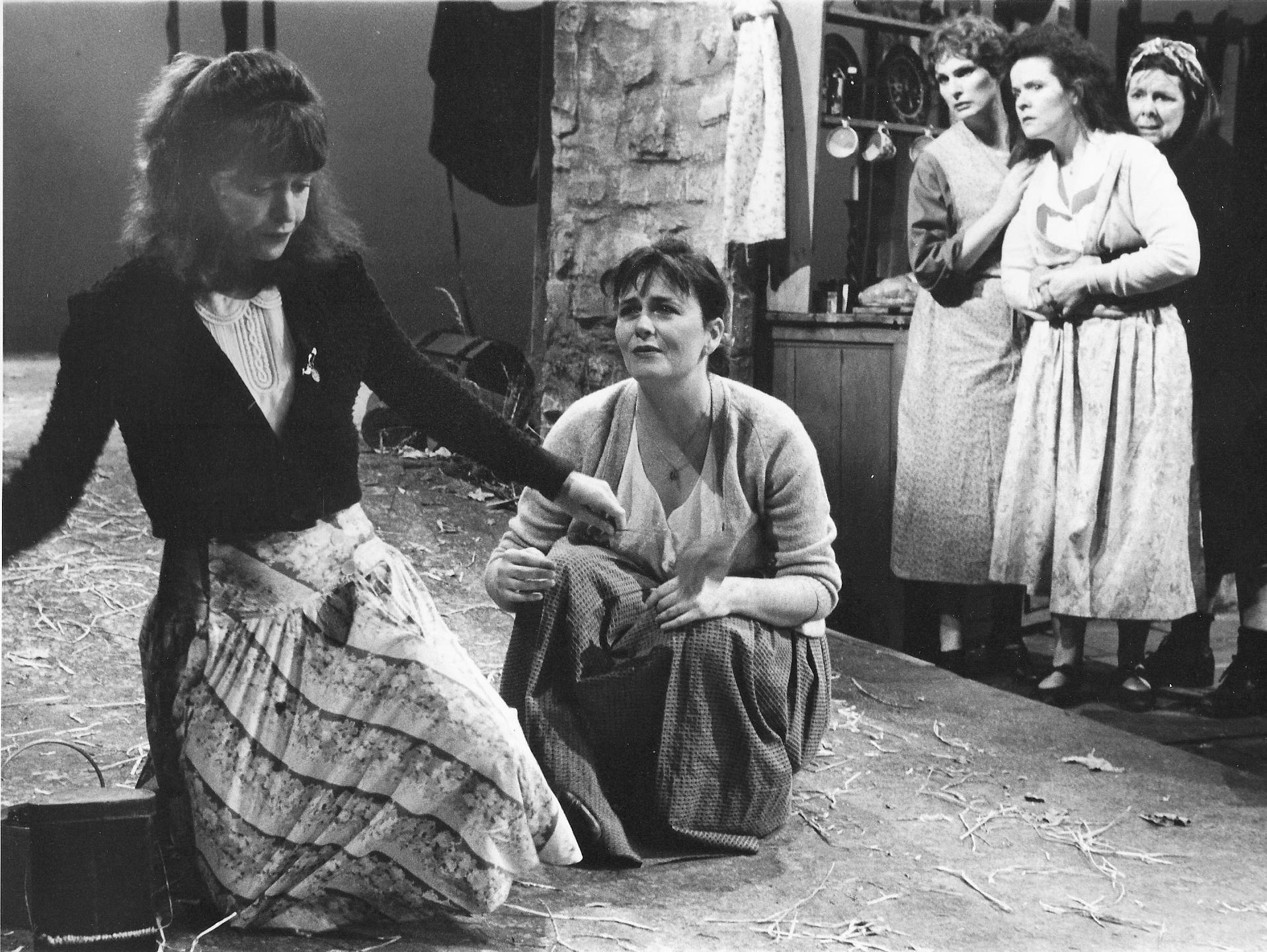
The five Mundy sisters were played by Gillian Kerswell, Anne Neville, Helen Walker, Hilary Burns and Caroline Bleakley. Anthony Curran played Michael, looking back on the summer of 1936 and supplying the voice of his seven-year-old self. Francis Lloyd was Gerry, his charming and unreliable father, and John Robb the sisters’ brother Jack, home from missionary work in Africa.
In this play memory takes visible form. The family kitchen is busy with work, petty quarrels, and the struggle to make ends meet. Looking back, Michael can see how those ordinary events have had a painful significance for the people and shaped their future lives.
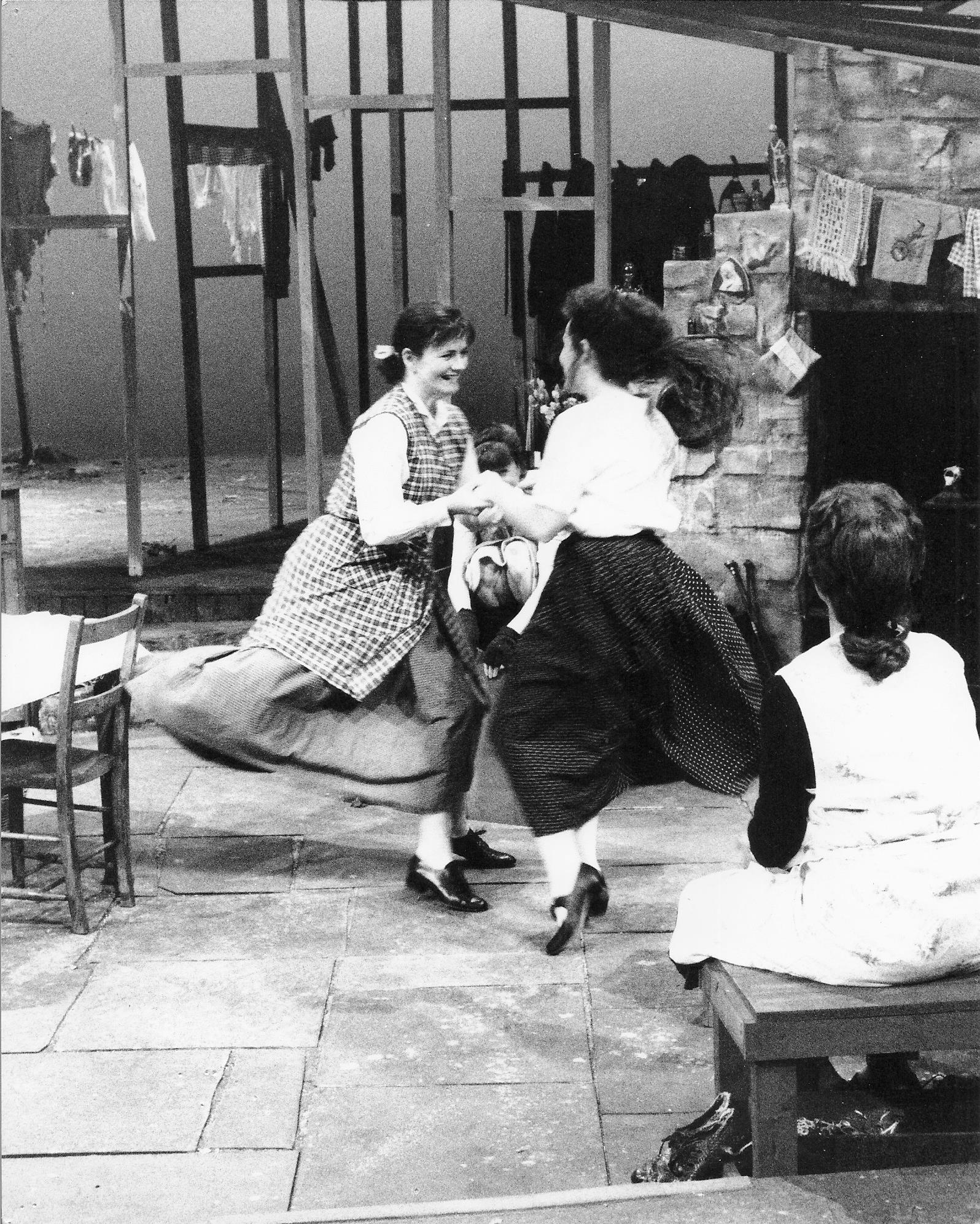
Peter Knight, reviewing the production in Questopics, found that Paddy and his cast made the frustrations of everyday life compelling, moving easily between laughter and distress. He remembered particular moments from each of the sisters: Maggie’s face changing as she recalled a lost happiness; Agnes dancing with Gerry; Chris looking at the man she loved while knowing that she could never quite possess him.
Above all, he remembered the dance. The crackling wireless suddenly coming to life, the sisters starting to move, and even the inhibited Kate eventually joining in. For a few moments, the household’s worries are played out in the physical exhilaration of the dance. Friel’s people, so often bound by words, discover a new way of expressing themselves.
Peter Knight did have some reservations. The expansive setting created some acoustic difficulties with certain lines lost upstage. But his detailed recollection of the performances leaves little doubt about their effect. The production had made him care about this family.
There is a pleasing practical footnote in the programme: no fewer than ten people were credited as dancing advisers. Those apparently spontaneous moments had considerable support behind them.
QUESTORS ARCHIVESDANCING AT LUGHNASA 1995
Translations 2001
Anne Neville, who had directed Faith Healer in 1992 and played Maggie in Dancing at Lughnasa, returned to Friel as director of Translations. The production opened in the Playhouse on 4 May 2001, designed by John Wibberley.
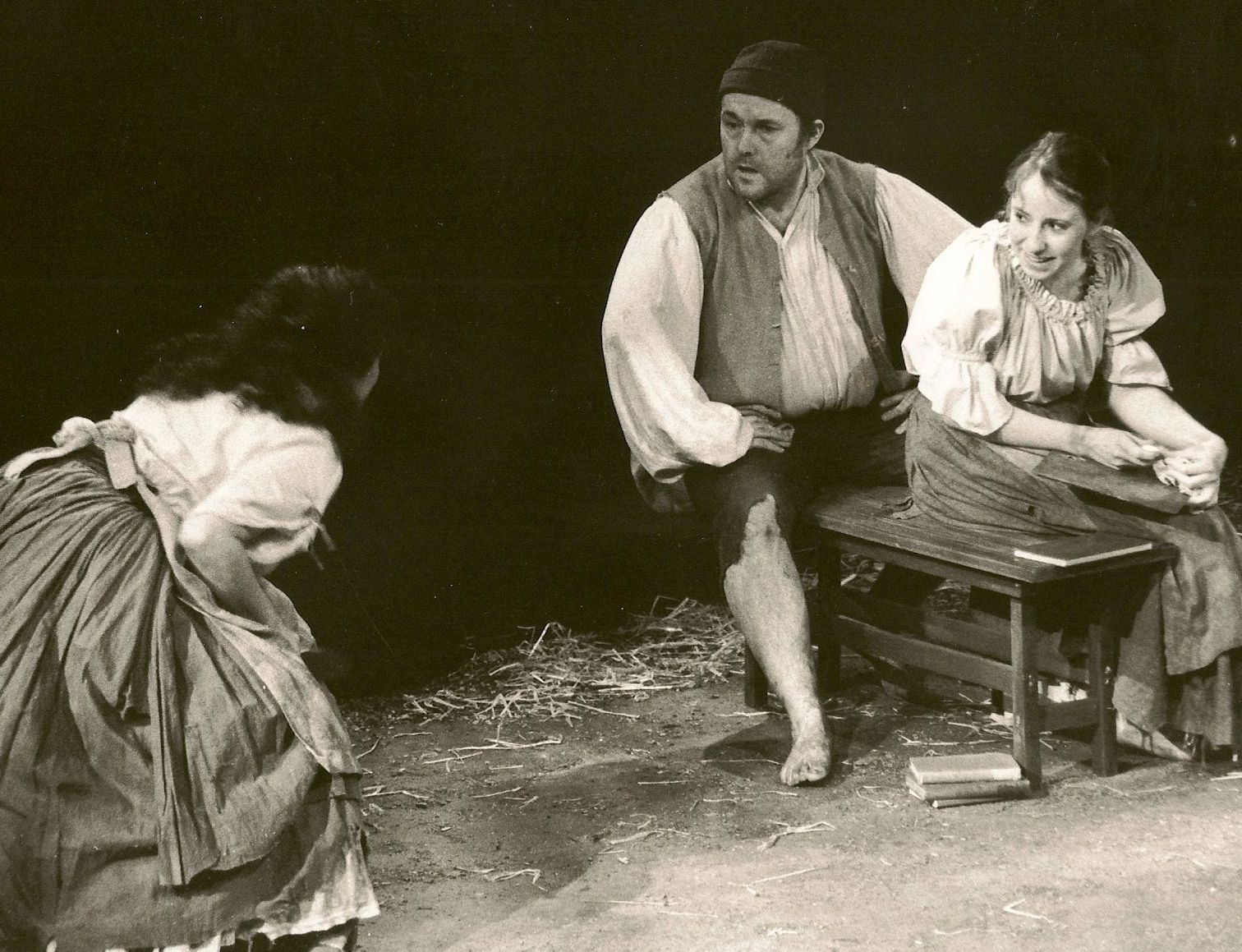
The setting is a hedge school in County Donegal in 1833. British soldiers have arrived to map the district, and Irish place names are being rendered into English. An administrative exercise becomes an intrusion into the ways people understand their home and themselves.
Friel’s theatrical device is beautifully simple. We hear the Irish characters speaking English, although within the play they are speaking Irish. We can understand both sides of conversations whose participants cannot understand one another. The audience is constantly aware of what fails to cross the gap.
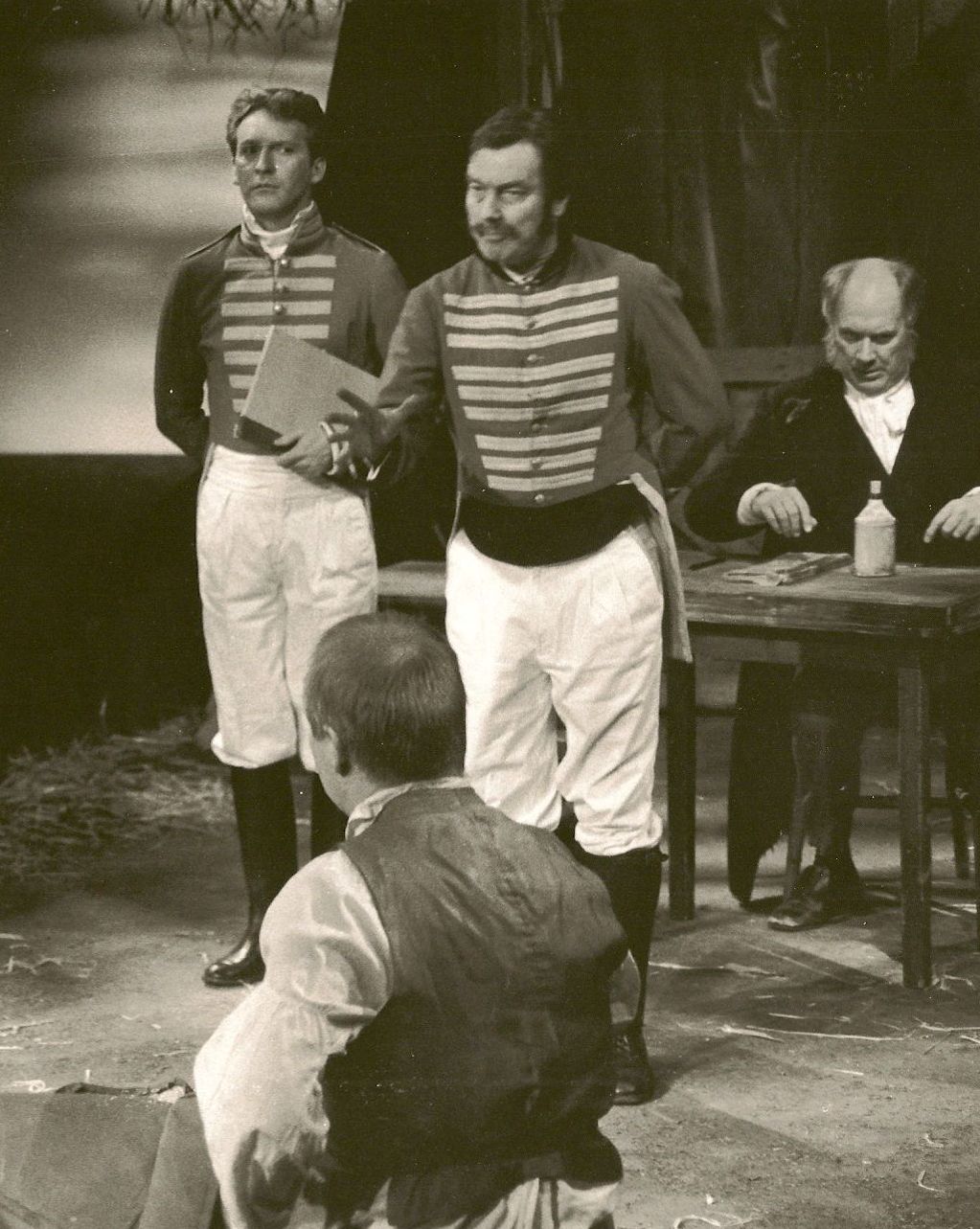
For Anne, the subject had a personal resonance. In a newspaper interview before the production, she spoke about her Irish family and childhood visits to Ireland. She also remembered the strength of its oral tradition: even ordinary events became stories. Her programme note asked what might be lost when a community’s language disappears, and whether a common language necessarily brings understanding.
Mike Langridge played Hugh, the schoolmaster, with Michael Greener and Will Everett as his sons Manus and Owen. Caroline Bleakley’s Maire and Robert Seatter’s Lieutenant Yolland supplied the love story at the centre of the linguistic confusion. Abigail Devlin, Keith Parry, Anthony Curran, Jane Backlog and Francis Lloyd completed the cast.
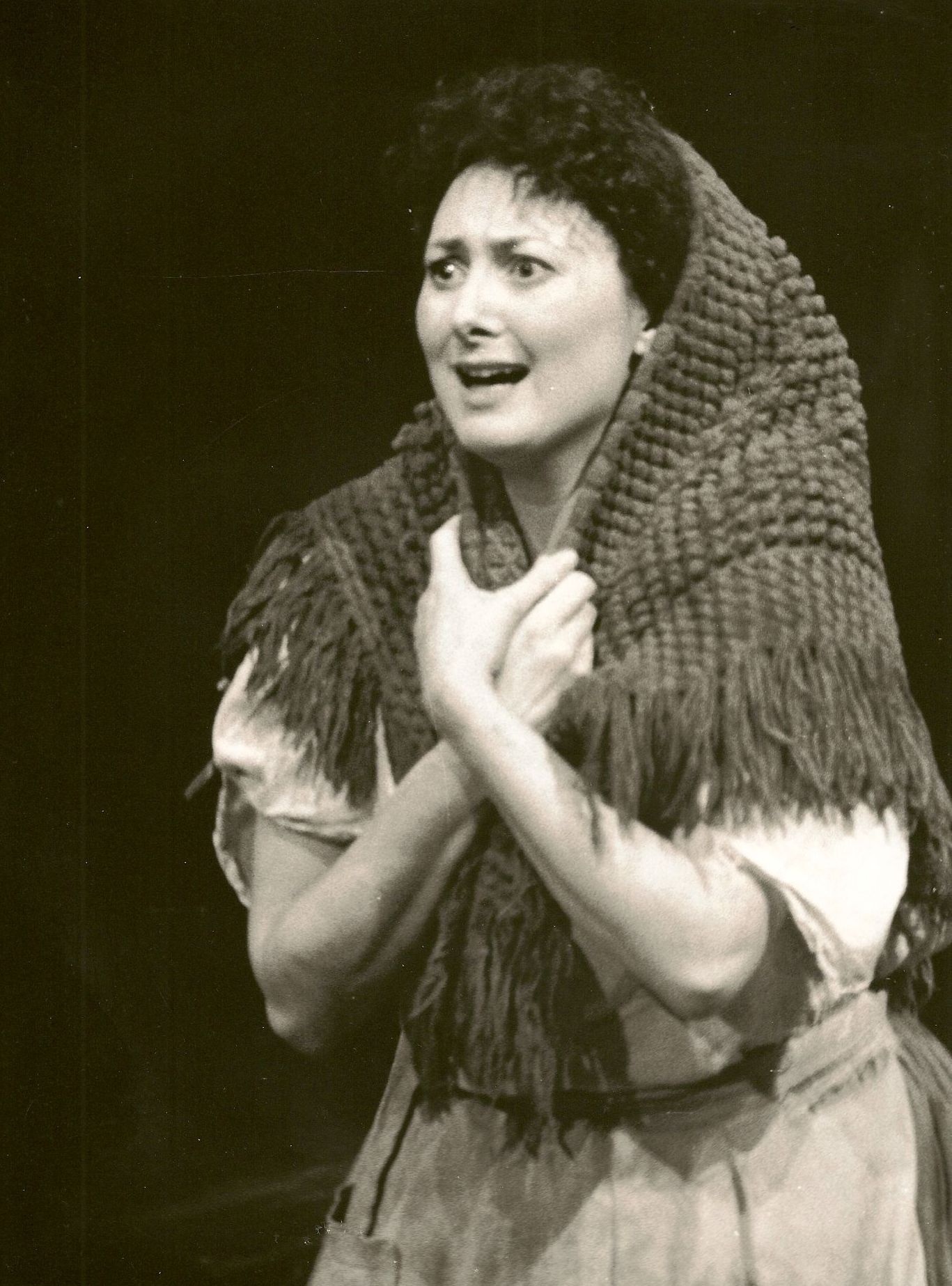
Lucy Heaney’s newspaper review praised the company across the board, particularly Caroline Bleakley, Robert Seatter and Michael Greener. Her account stressed the movement between laughter and suffering: a useful reminder that the play’s ideas reach us through people with work to do, affections to deal with and dreams to fulfill.
Anne ended her programme note by saying that the company felt it could go on exploring the play indefinitely. Our successive visits to Friel were beginning to suggest much the same thing.
QUESTORS ARCHIVESTRANSLATIONS 2001
Molly Sweeney 2002
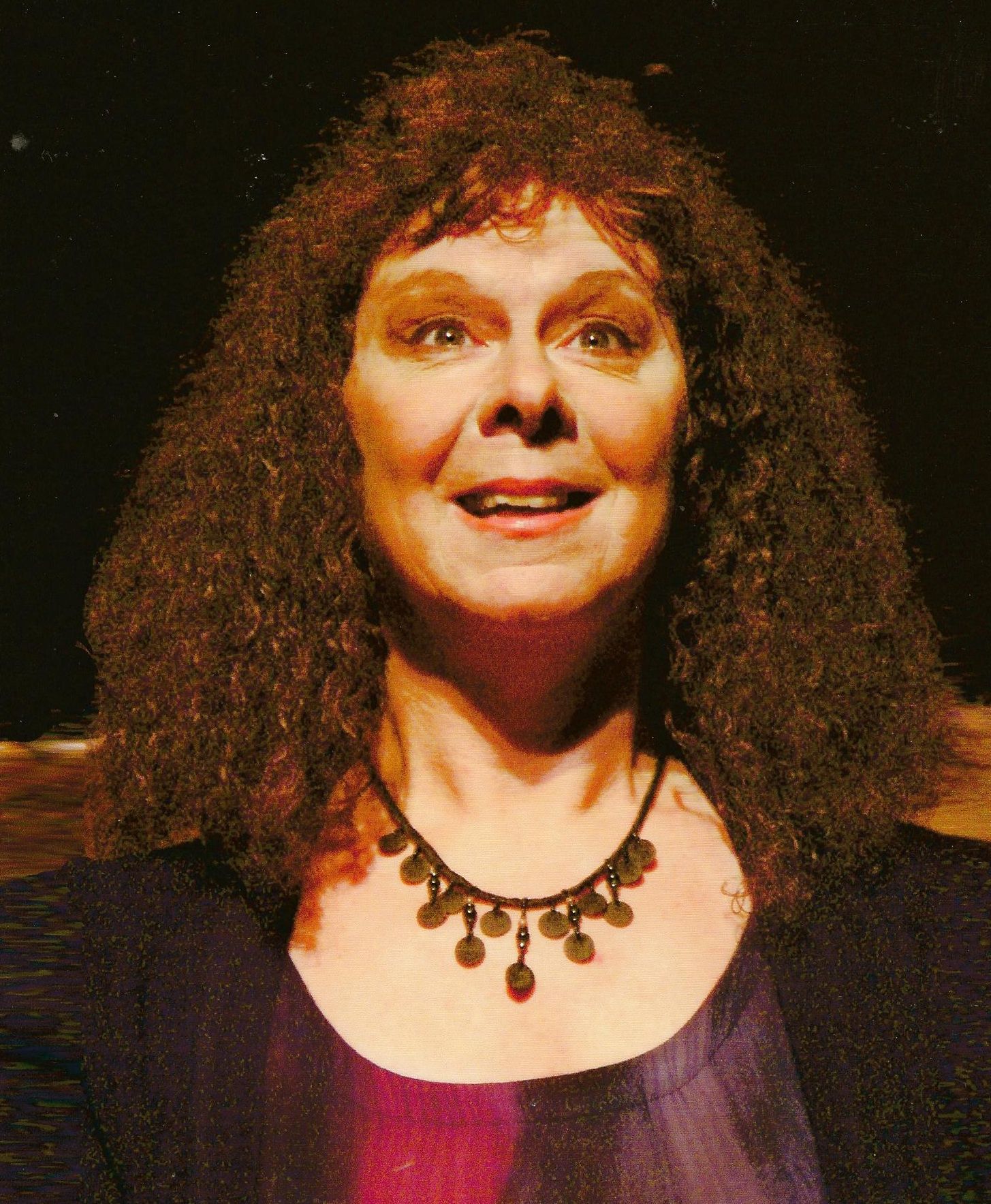
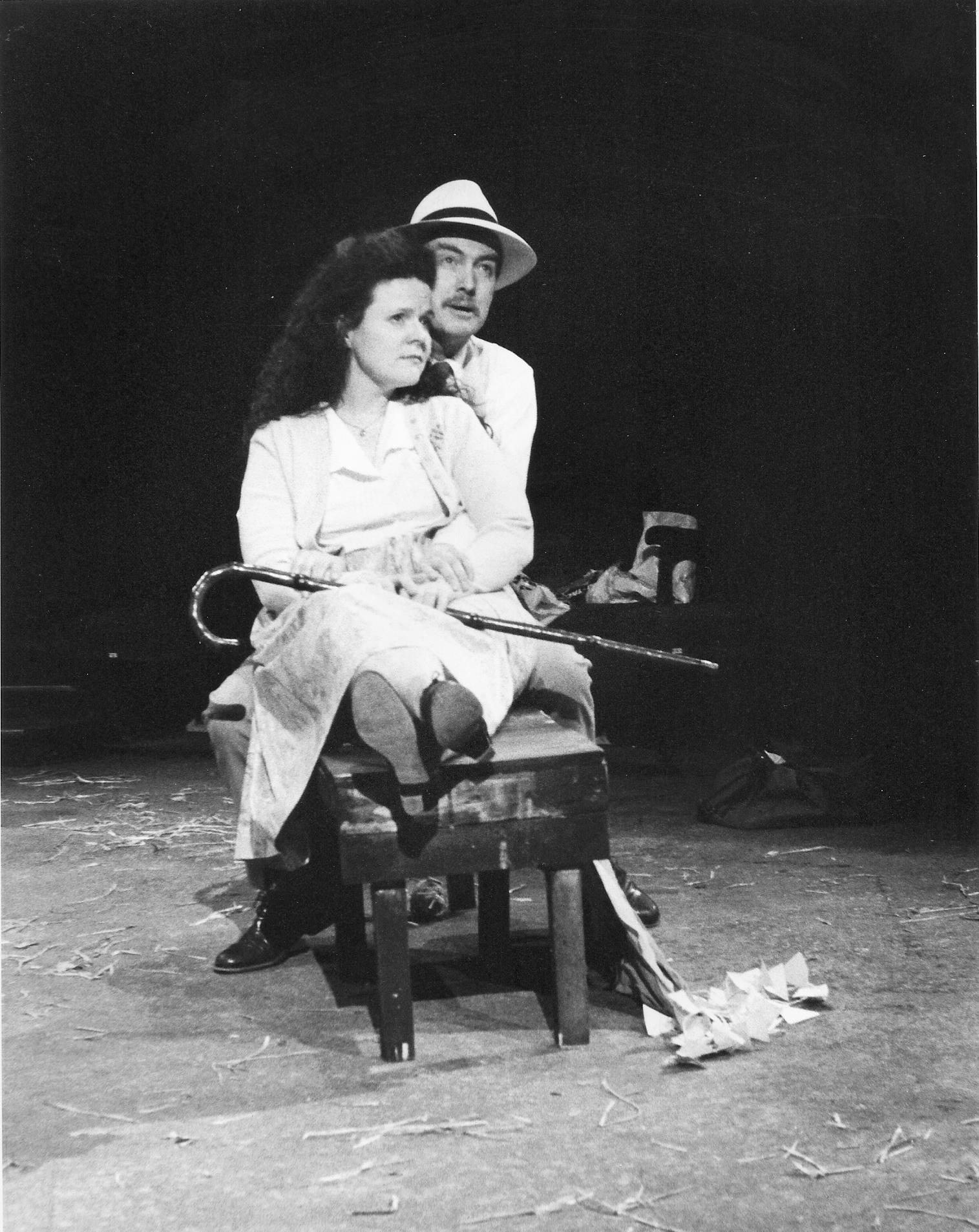
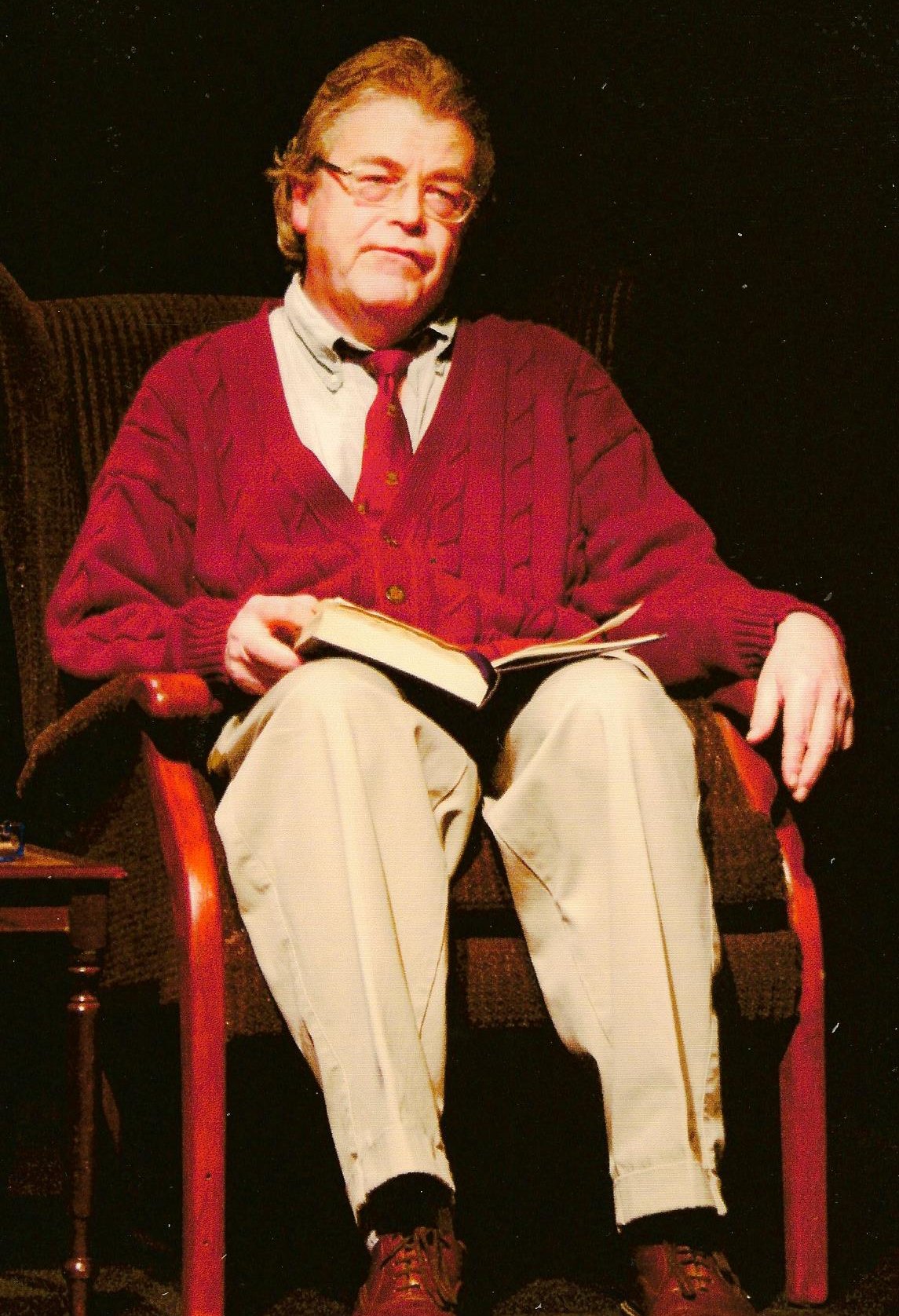
In November 2002, Anne Neville switched from directing Friel to playing another of his central characters. Peter Field’s production of Molly Sweeney opened in the Studio on 16 November, with Anne as Molly, Christopher Cullen as her husband Frank and John Turner as the surgeon, Mr Rice. Peter Field also designed the production, and music was provided by violinist Orpheus Papafilippou and singer Maria Brusa.
Once again we are faced with three speakers with three separate accounts of the same story. Molly has been blind since infancy and has developed a full life through touch, sound and the familiar patterns of her surroundings. Frank believes that an operation to restore her sight will enrich that life. Rice, whose own career has faltered, has reasons of his own for wanting the operation to succeed.
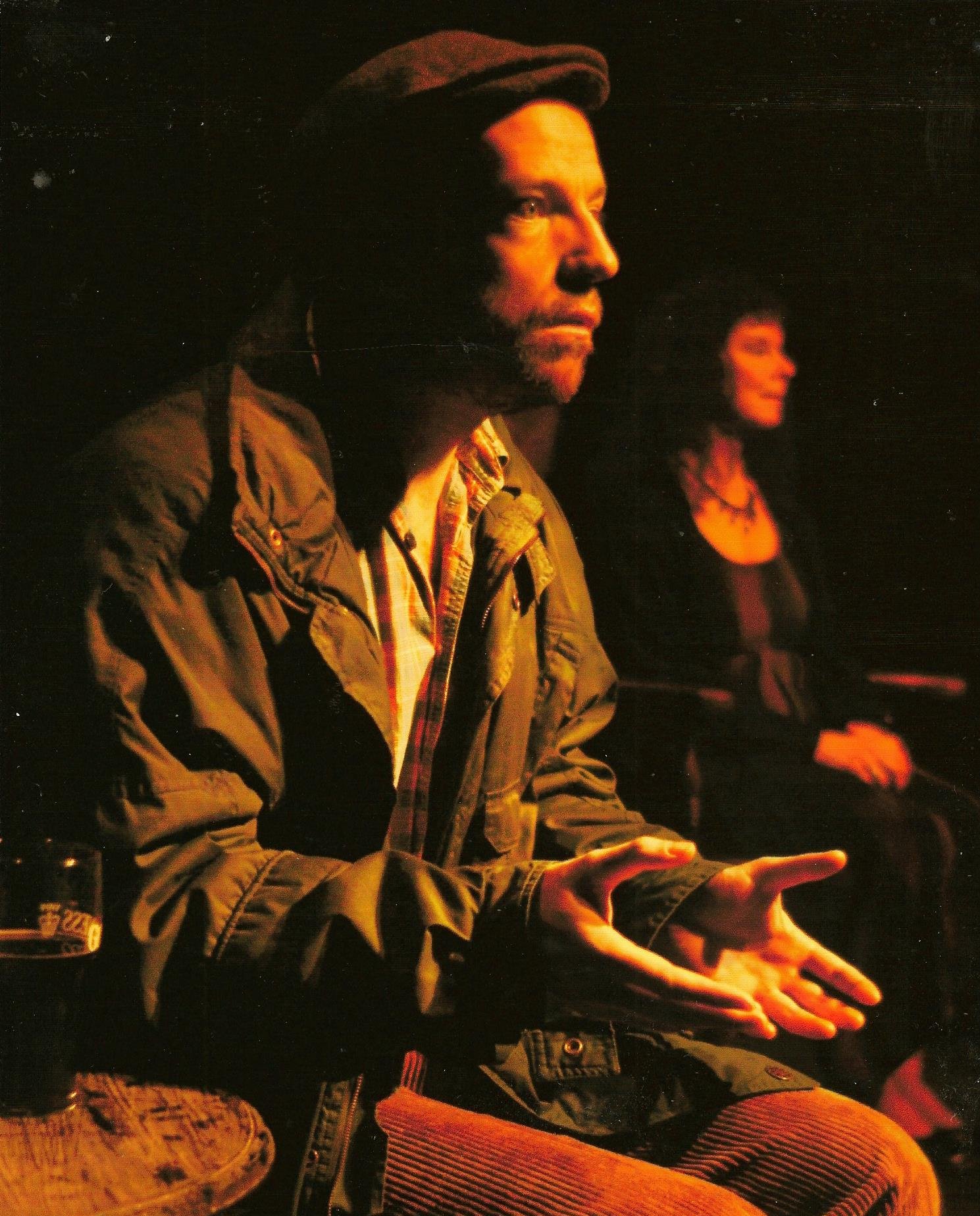
But who properly understands what it is that Molly needs? In their enthusiasm to improve her life the men struggle to comprehend the riches she already possesses.
The preview in Questopics recognised this distinction. It described a play concerned with emotional as well as physical blindness, in which Frank and Rice fail to see both their own limitations and Molly’s resourcefulness. As in Faith Healer, the separate voices allow the audience to hear things which the characters cannot fully share with one another.
There is a strong connection between the two plays. Both concern the promise of healing and the people whose hopes gather around it. Both ask actors to hold an audience through the art of storytelling. A decade after our first encounter with Friel, we were again discovering how much we can learn from three different views of the same story.
QUESTORS ARCHIVESMOLLY SWEENEY 2002
The Bear 2018
Our next encounter brought a considerable increase in noise and physical activity. Friel’s version of Chekhov’s The Bear opened in the Studio on 2 February 2018, sharing a double bill with Tony Rushforth’s A Priest in the Family, adapted from Colm Tóibín’s short story.
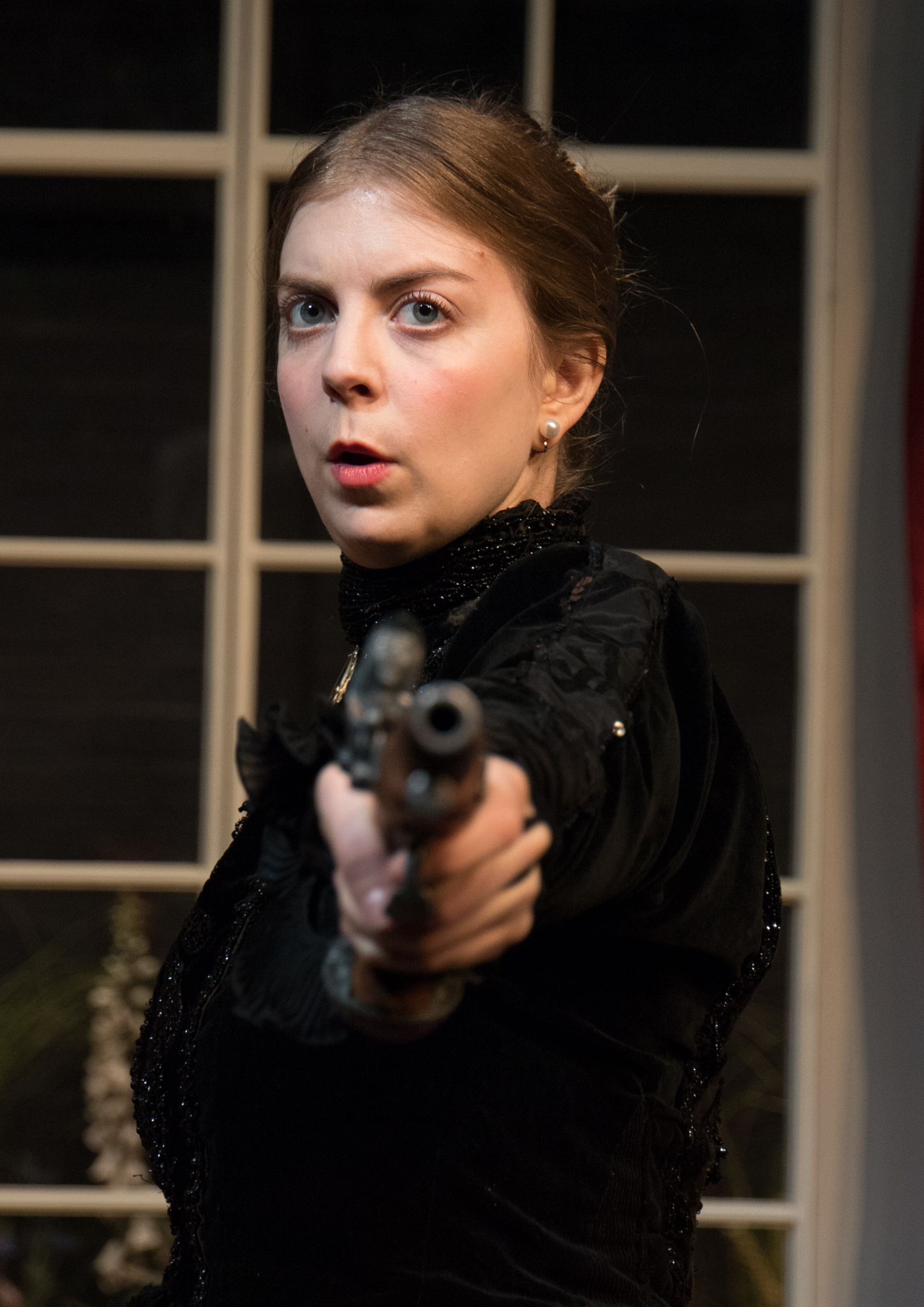
Sarah Stoddart directed Nina Flitman as the widow Elena Popova, Julian Casey as the belligerent landowner Smirnov and Tim Pemberton as Luka, the servant left to cope with them. A dispute over money escalates into the threat of a duel, while the combatants discover that their feelings are becoming inconveniently intertwined.
Sarah’s programme note emphasised the energy of Friel’s modern language and the changing balance between the two antagonists. Popova’s determined fidelity to her dead husband meets Smirnov’s sweeping denunciations of women, and neither position survives the encounter intact. Friel’s ear for the things people reveal while insisting upon something else found plenty to enjoy in Chekhov’s farce.
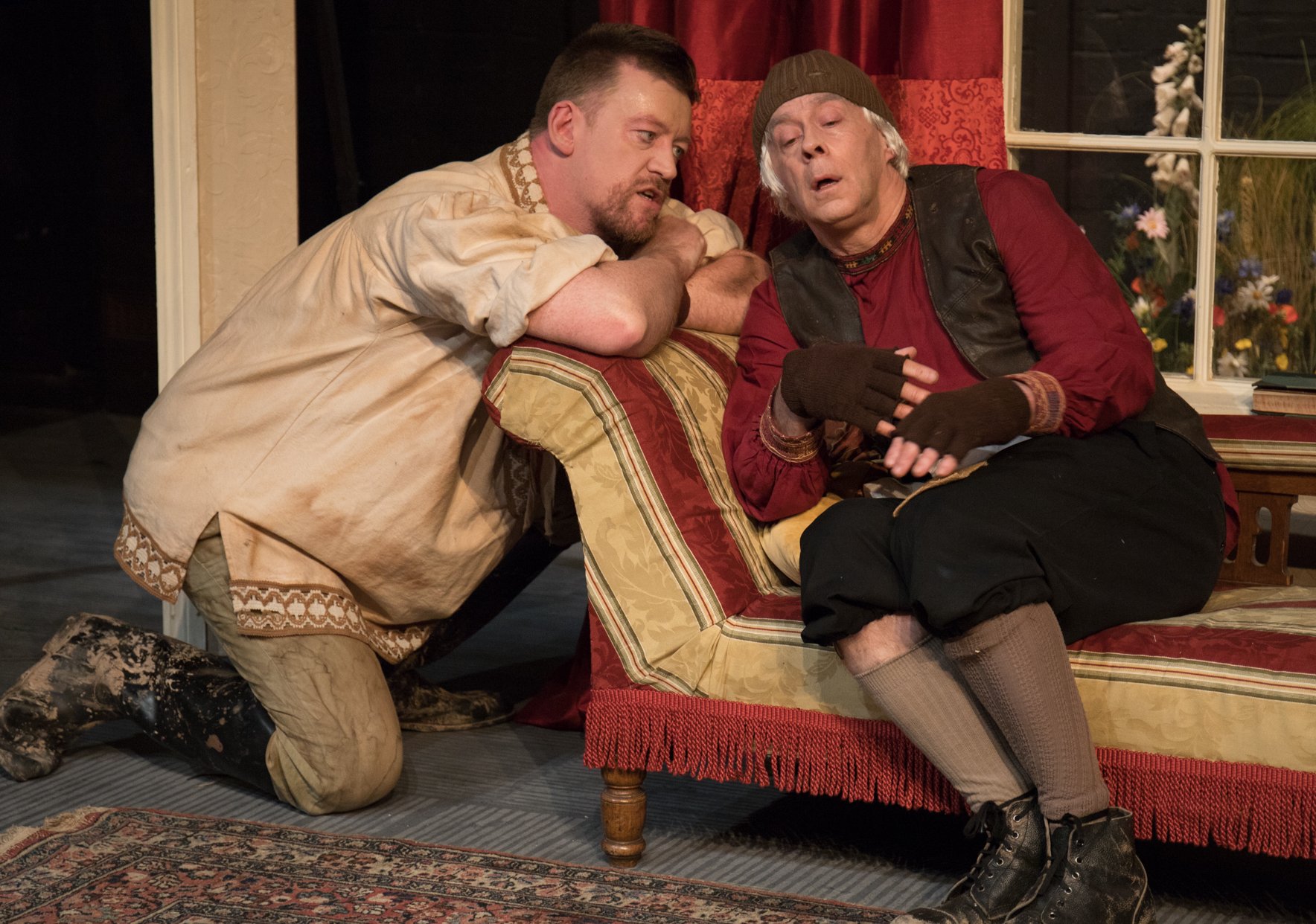
In August the production travelled to the tenth NEATA festival in Lithuania, where it played on 2 August. The response there was warmly enthusiastic. Festival artistic director Dr Danutė Vaigauskaitė praised the acting, direction, costumes and atmosphere, and particularly the strength of the ensemble. In comments circulated to Questors members afterwards, she described the production as a gift to the festival and its international spectators.
An Irish playwright’s version of a Russian comedy, performed by an Ealing company in Lithuania: a rather agreeable extension of the European journey with which our Friel story had begun.
QUESTORS ARCHIVESTHE BEAR 2018
Listening Again
Looking back over these productions, the recurrence of familiar names is part of the pleasure. Anne Neville’s contribution runs through all four full-length plays; other actors return to meet Friel in different circumstances and at different stages of their own lives.
The plays have offered equally varied experiences: the solitary storyteller’s exposure, the intricate relationships of a family, the misunderstandings of a divided community, and the exhilaration of farce. Their demands have drawn memorable work from the people on stage and those supporting them.
Now Faith Healer returns, and with it the invitation to listen again. Some of us will bring memories of 1992. Others will meet Frank, Grace and Teddy for the first time. Friel leaves room for both, and plenty for us to talk about afterwards.
John Dobson
October 2026